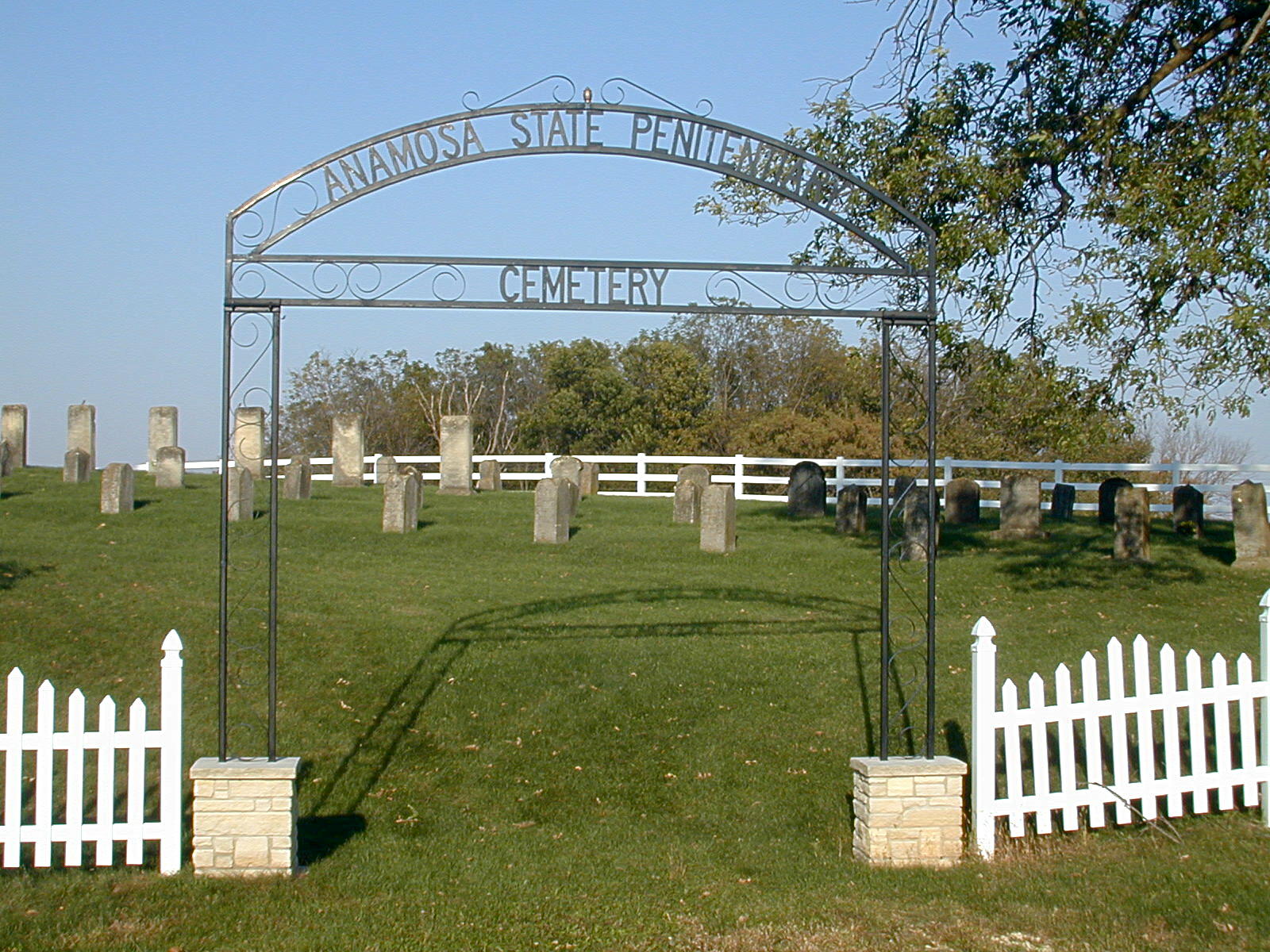
It didn't take long before the new penitentiary had to deal with one of life's constant realities: death. Barely had the new convicts arrived in May 1873 before the first death among them occurred, in December 1873. A young man named George Williams passed away, circumstances unknown, and he was buried west of the prison, across the Buffalo, in land that is now Farm 1.
Over the years, he was joined by over 50 additional prisoners, taken by death, whose bodies were unclaimed. Transporting a body by train was hugely expensive for most families, and simply not a viable option. The state would bury them free.
In 1913 or thereabouts, when prisons everywhere decided to boost their farming operations in a major way, the land used for the cemetery was to be converted to farmland. Hence, the cemetery would have to move. The bodies were exhumed and reburied in a triangular piece of ground about 3/4 mile away, high on a hill off Ridge Road. It is actually a beautiful spot, amid the rolling hills of Grant Wood Country, the prison looming down the hill, in the far distance.
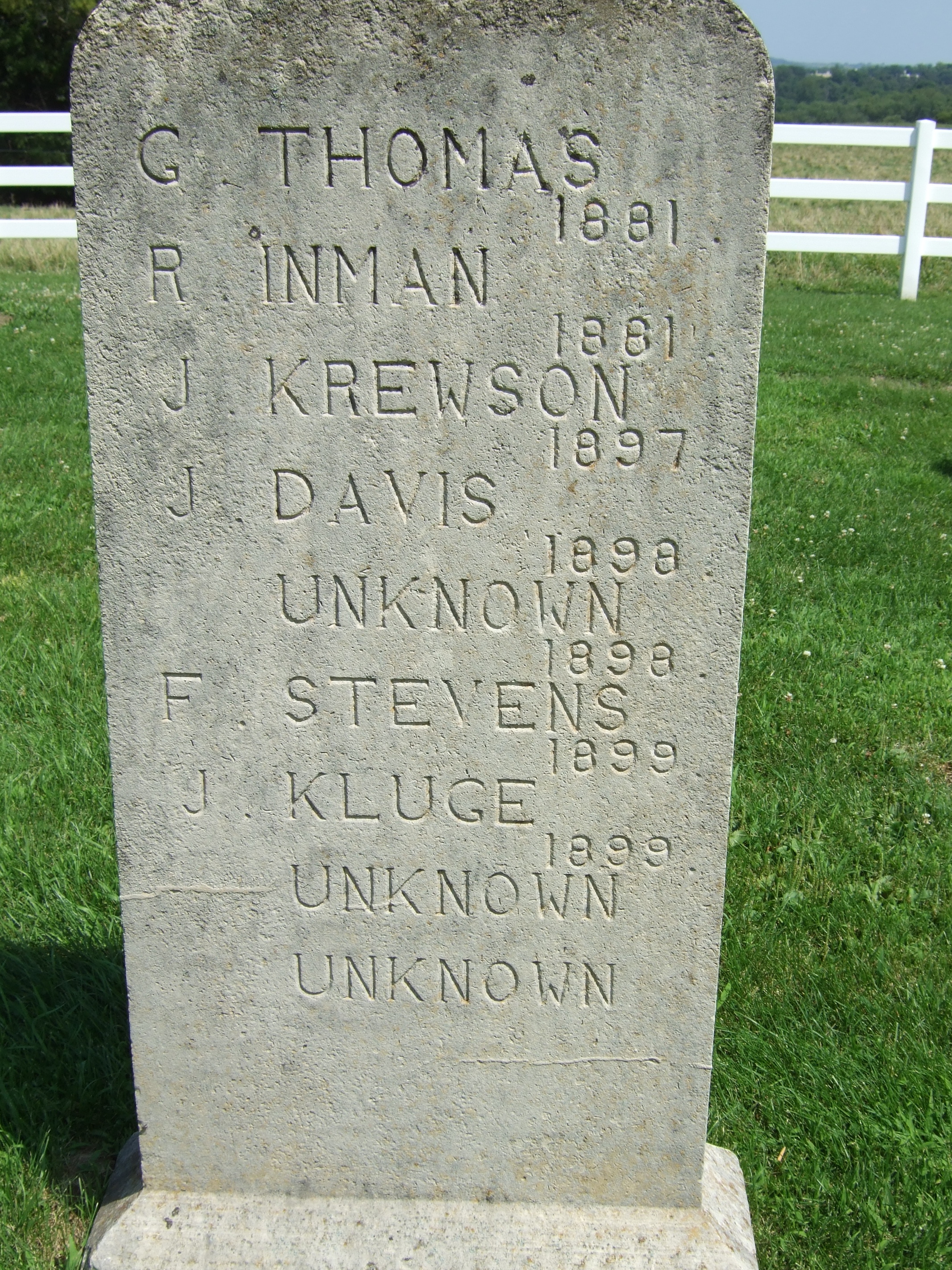
The massive multi-name monument erected at the relocation site to commemorate those exhumed during the 1913 farm conversion.
It is likely little remained of most of the exhumed bodies, so they were buried in common graves in the new location, with a single marker containing many names. The stones are simple, with little adornment, and were carved by fellow inmates. After all, if there was anything the prison had in abundance, it was stone.
Burials slowed during the 20th century. After the conversion of the prison to a Reformatory in 1907, mainly younger men, less prone to death, were housed here. As transportation improved and family incomes increased, it became rarer for bodies to be unclaimed. Consequently, a burial in 2005 was the first in 40 years. In the modern era, all bodies are cremated prior to burial. And since only Anamosa and Fort Madison have established cemeteries, deaths at other state prisons occasionally result in the remains being here for final interment.
There were a deceased inmates who were buried in Riverside Cemetery and Holy Cross Cemetery in Anamosa. Catholics would occasionally ask the local priest if permission could be given for their loved one to be buried in "consecrated ground" in a Catholic cemetery, rather than Boot Hill. There are several female inmates in Riverside, as the chivalrous wardens of the day vowed that no woman would be buried in the prison cemetery under their watch.
Today, the cemetery is maintained by prisoners. It is neat, tidy, with a tasteful wrought iron archway that attracts passers-by who stop to visit and to satisfy their curiosity.