Inmates
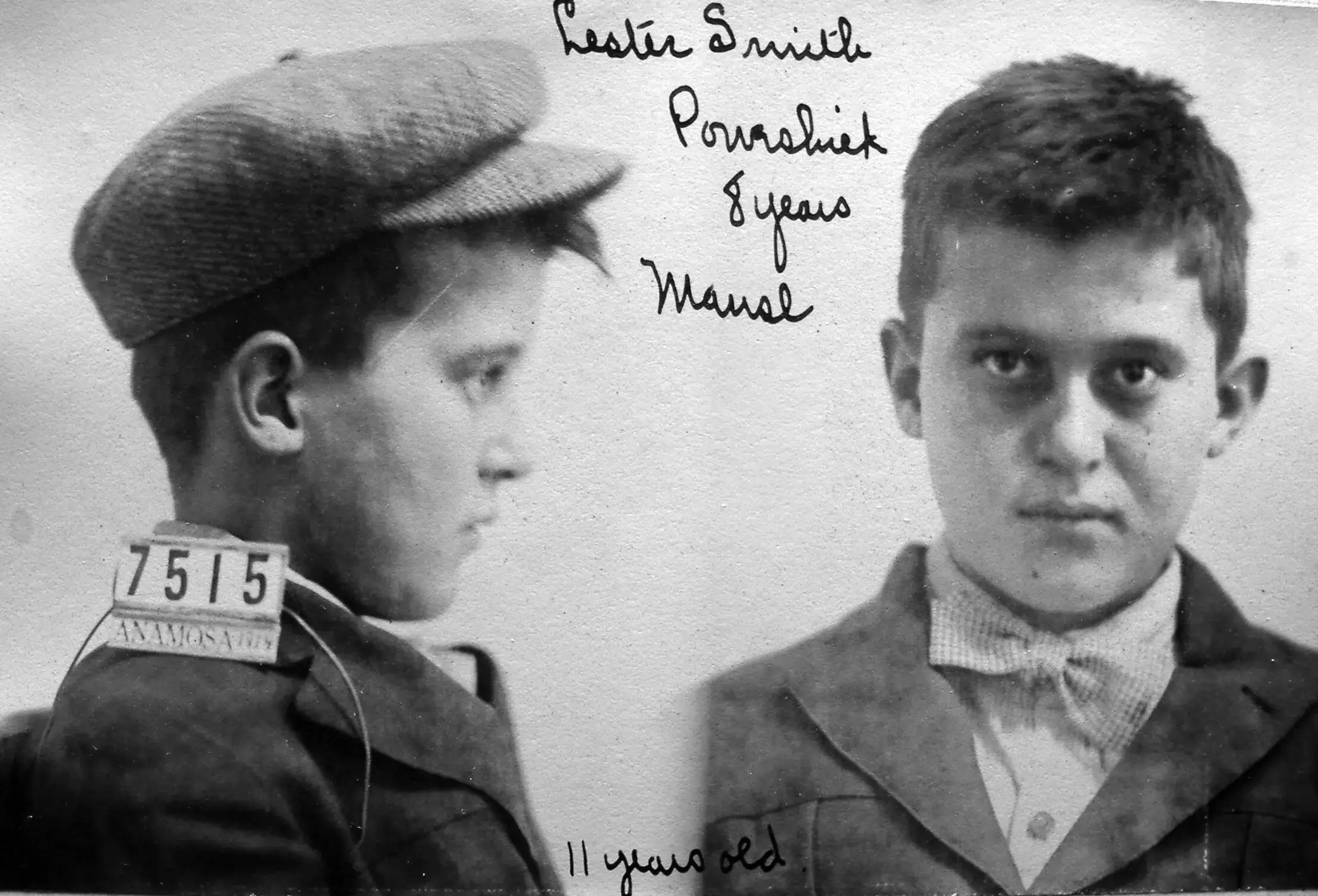
Child Prisoners
The State of Iowa established a Training School for Boys in Eldora in 1872. However, on occasion, with extremely violent crimes, the offender would be sent to Anamosa. Imagine the challenges that presented to the warden, forced to care for a child in a prison filled with adults! Take the case of Lester Smith. He was sentenced to 8 years for shooting his brother to death and wounding his father. He arrived in 1914, standing 5 foot 3 inches tall and weighing 105 lbs. He was paroled in 1917.
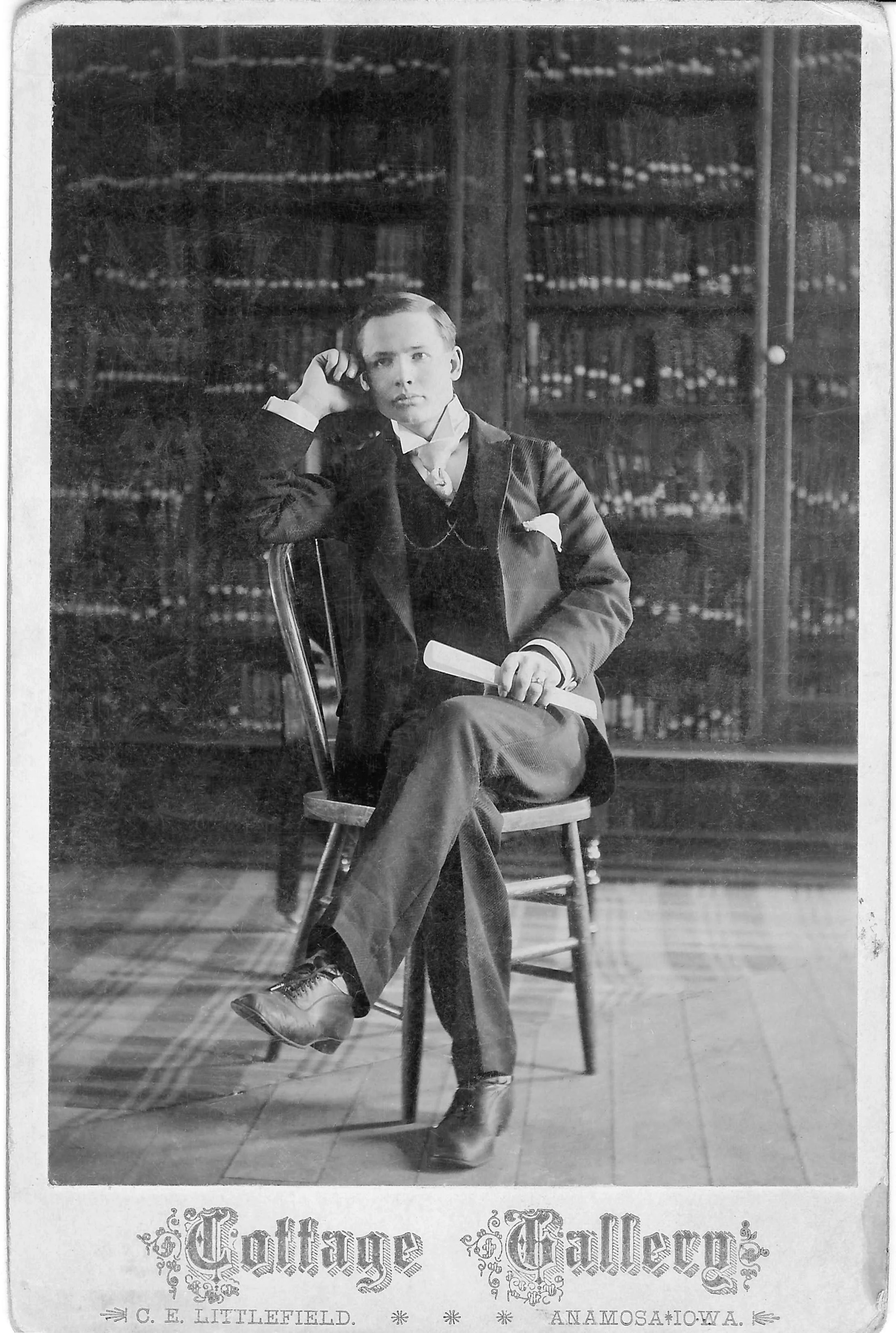
Child Prisoners - Wesley Elkins
Wesley Elkins was only 11 when he was sentenced for killing his father and step-mother in Clayton County in 1889. His story is available here. When admitted, he was 4'7" tall and weighed under 80 pounds! The warden kept a close eye on him, and, within 10 years, the boy had become a man and had educated himself in the prison, becoming an articulate advocate for his own release. This photo was likely taken at time of release in 1902, with parole papers in hand.
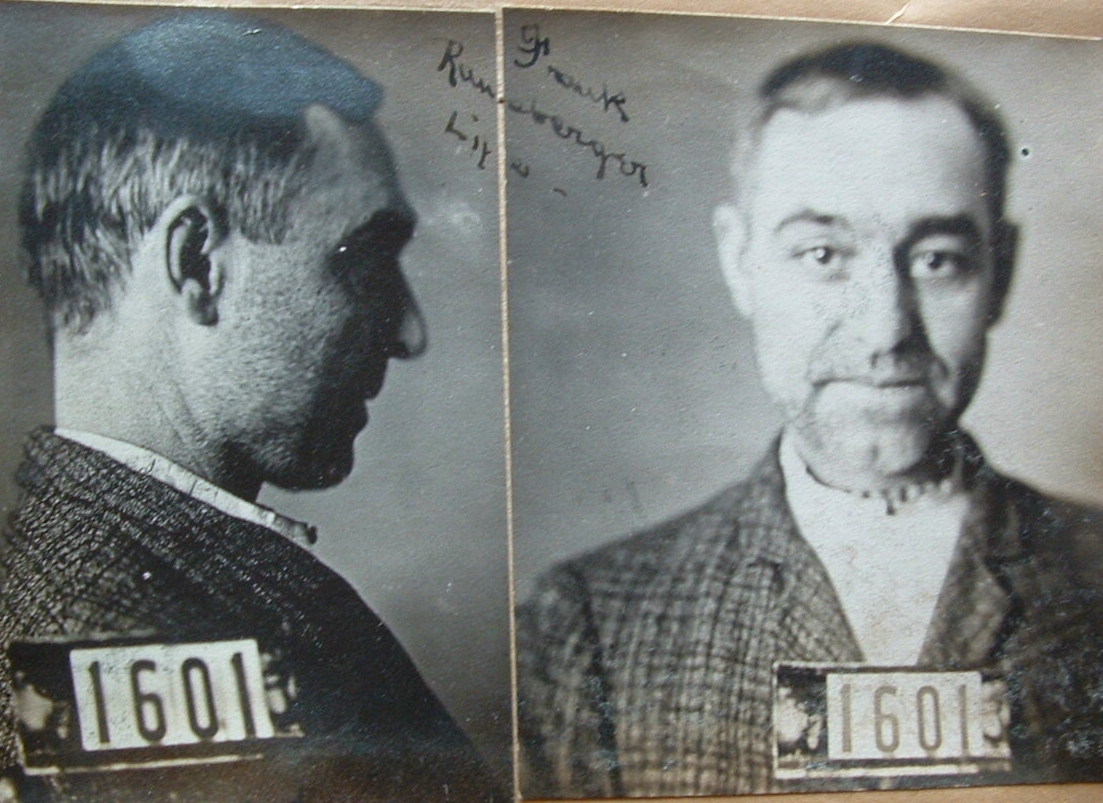
Mugshot - Frank Rainsbarger
Mugshots of prisoners have been around since the beginning of photography. Take this one of Frank Rainsbarger, part of the notorious Hardin County family that gained national attention (read about the Rainsbargers HERE). The standard front / side profile format is still widely used today.
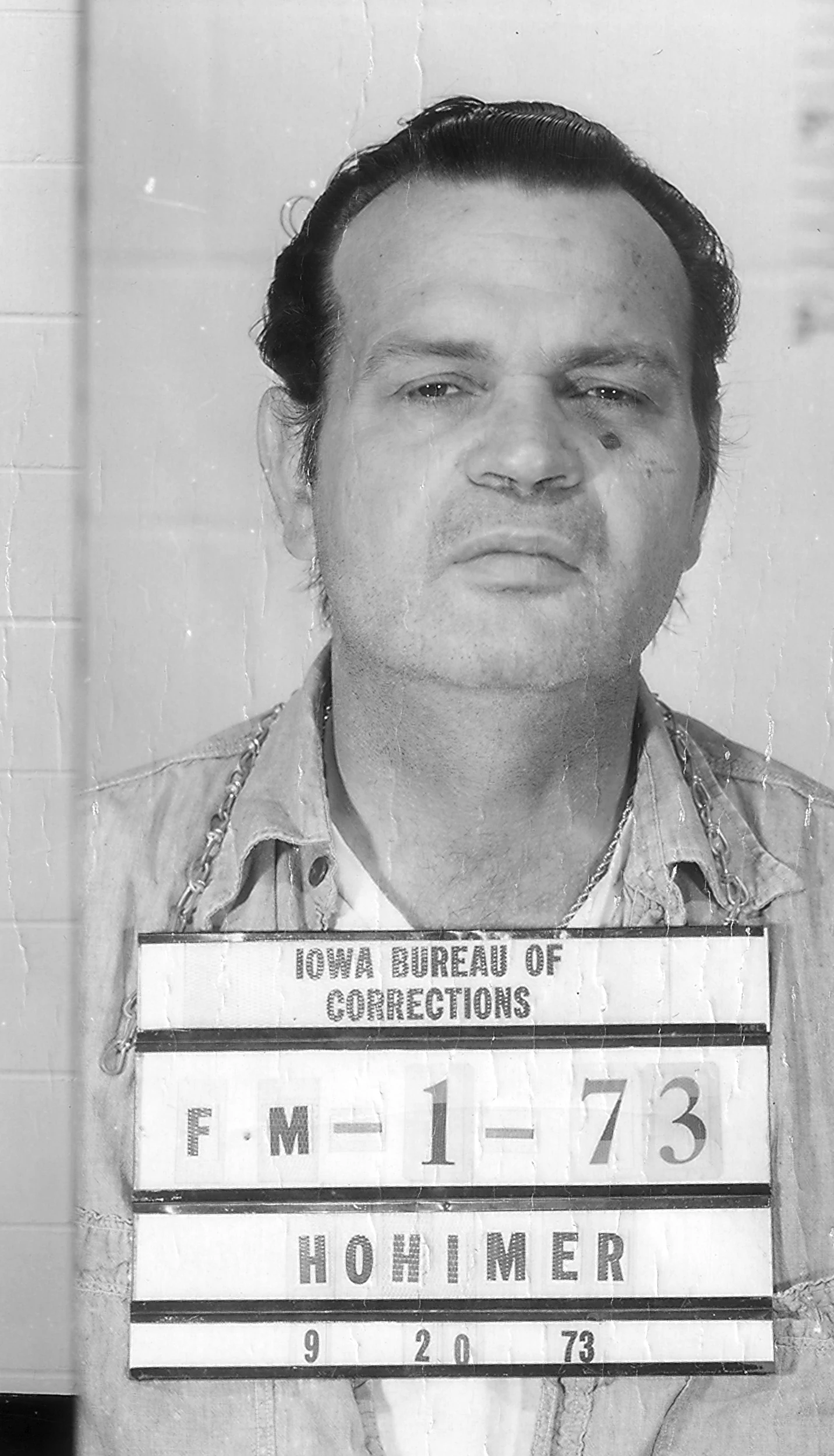
Frank Hohimer
Hohimer achieved national notoriety as a cat burglar who worked on behalf of the Chicago mob, stealing gems and jewelry. He eventually wrote his memoirs, "The Home Invaders: Confessions of a Cat Burglar" which was made into a movie in 1975 starring James Caan.
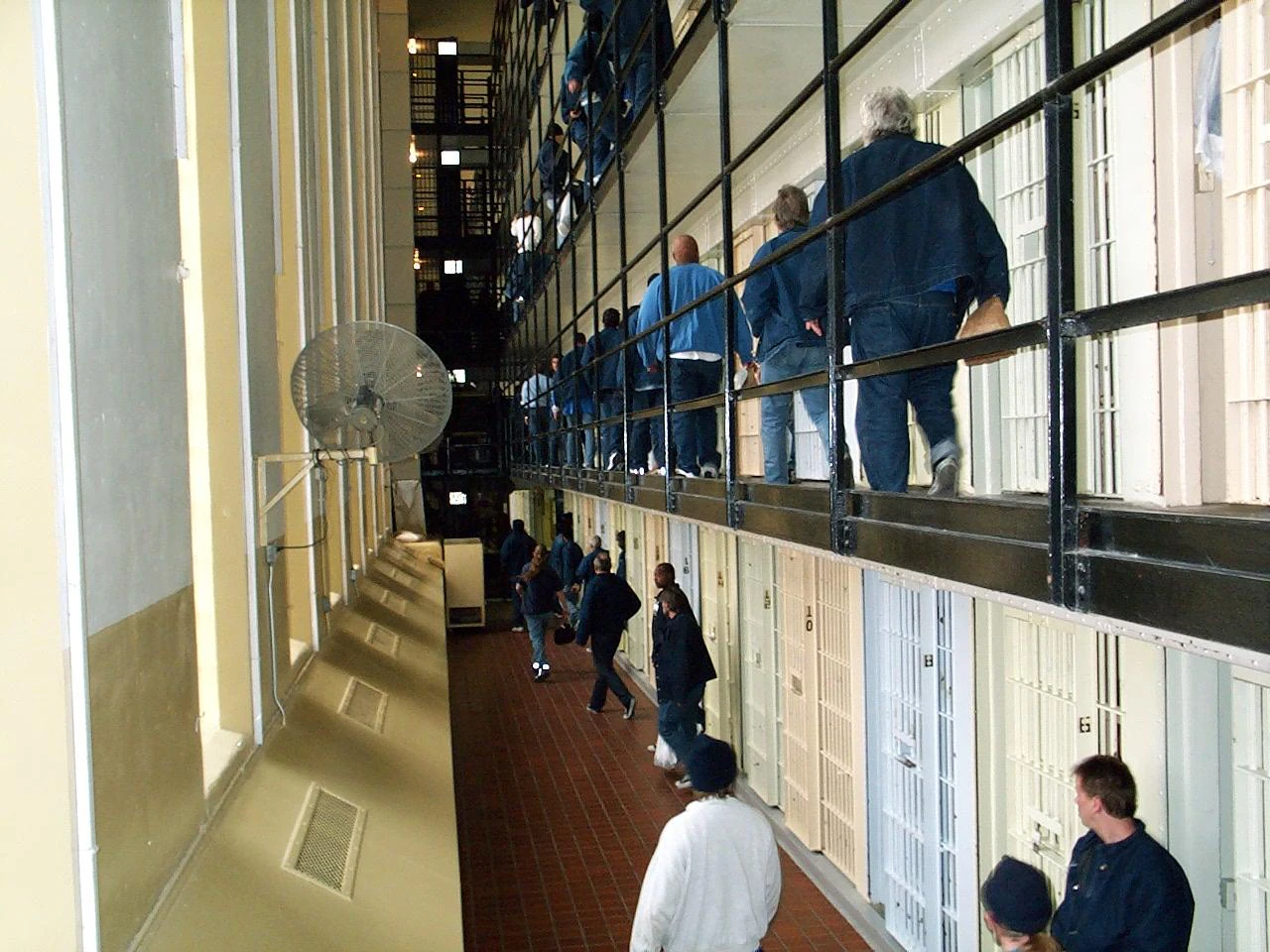
Cell Lines
In one of the major cellhouses at Anamosa, inmates can enter / exit their cell only at certain times, when their cell door opens for one minute. These are called "cell lines."
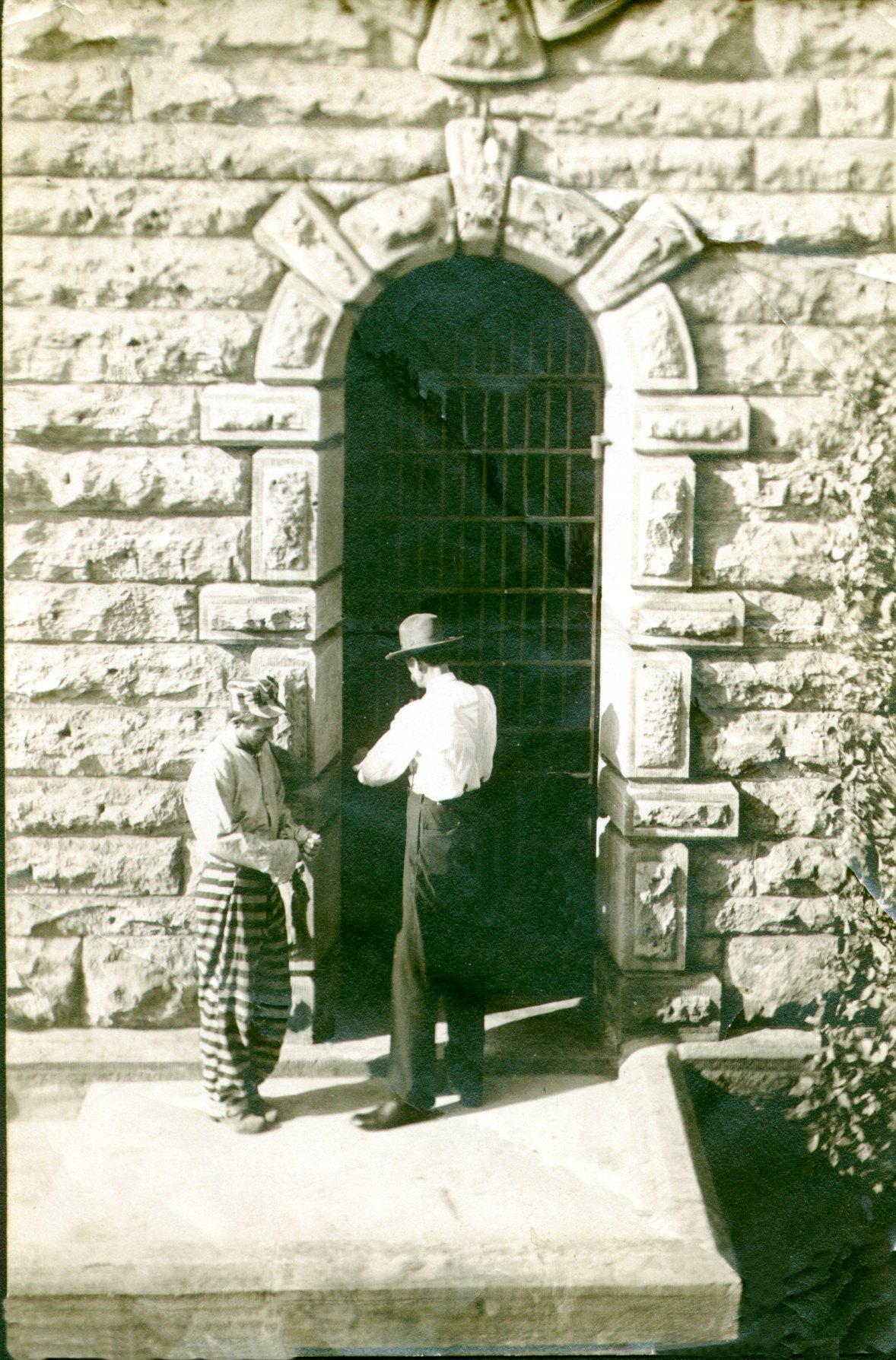
Solitary
Serious violations of prison rules result in disciplinary confinement. In the old days at Anamosa, inmates could be shackled to wall rings as punishment, but it was used rarely. Being placed in a dark cell, and / or bread and water rations were usually sufficient.
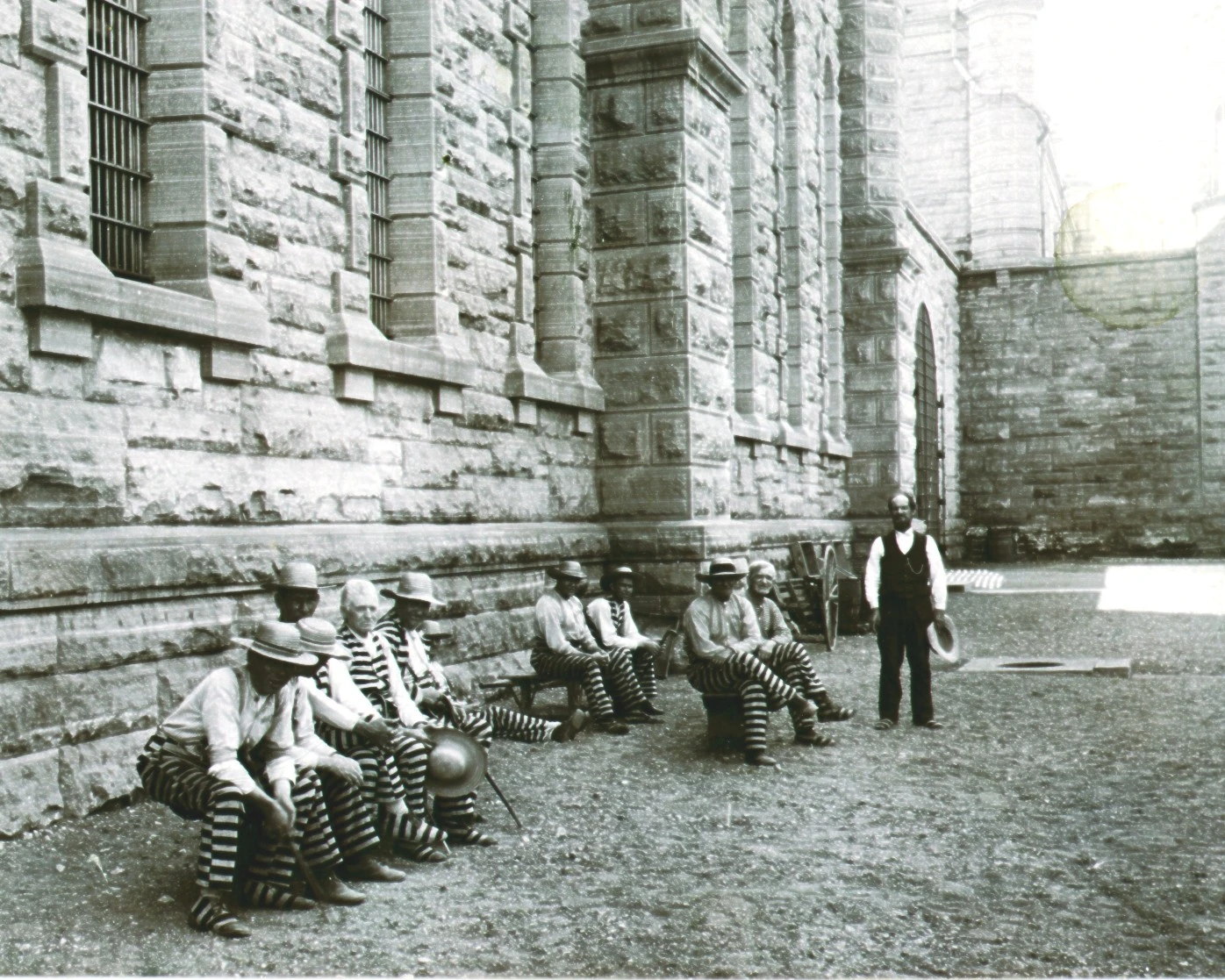
"Papa's Crew"
The caption "Papa's Crew" is the only identification on this old photo, which shows a possible work crew taking a break in the shadow of the massive cellhouse.
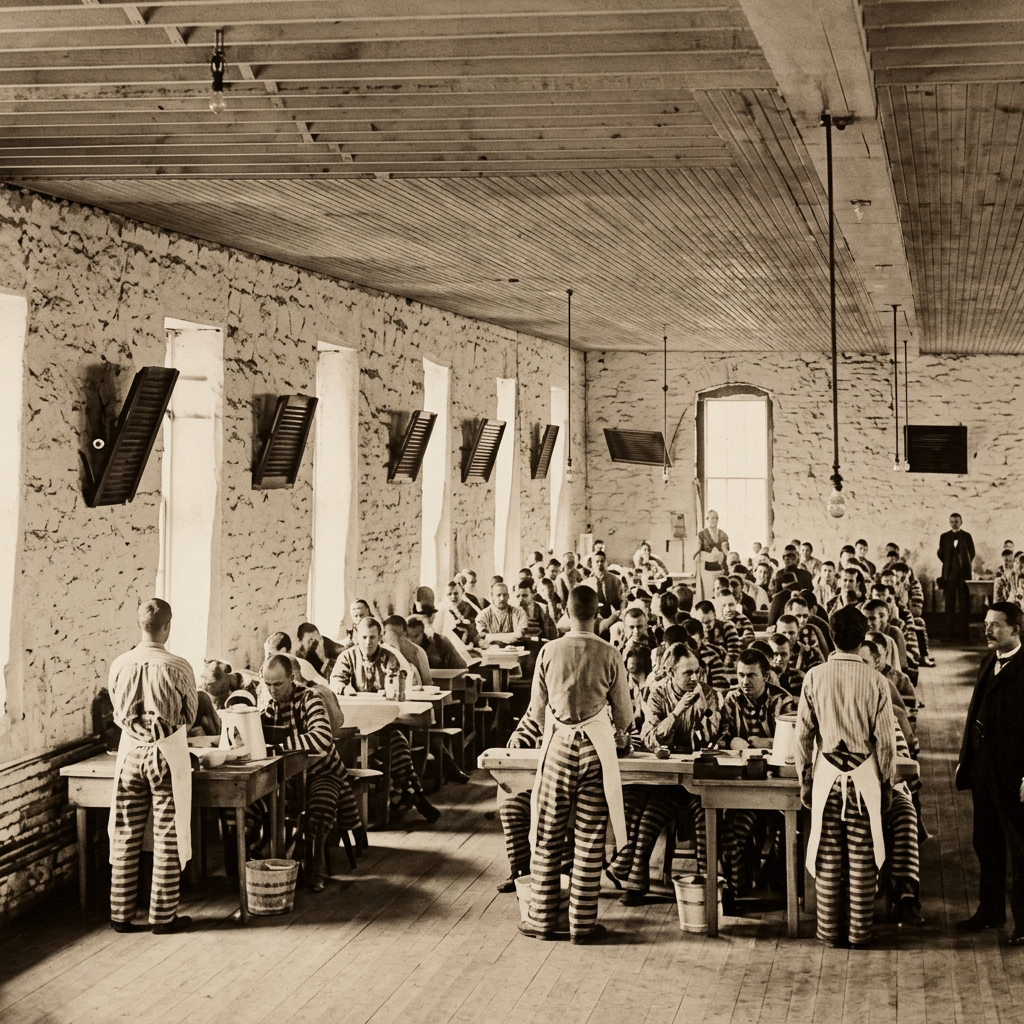
Time To Eat
This prison dining hall was in one of the earliest prison construction projects, built in 1875. The building had multiple uses, including chapel, library, and hospital. It burned in the Fire of 1896.
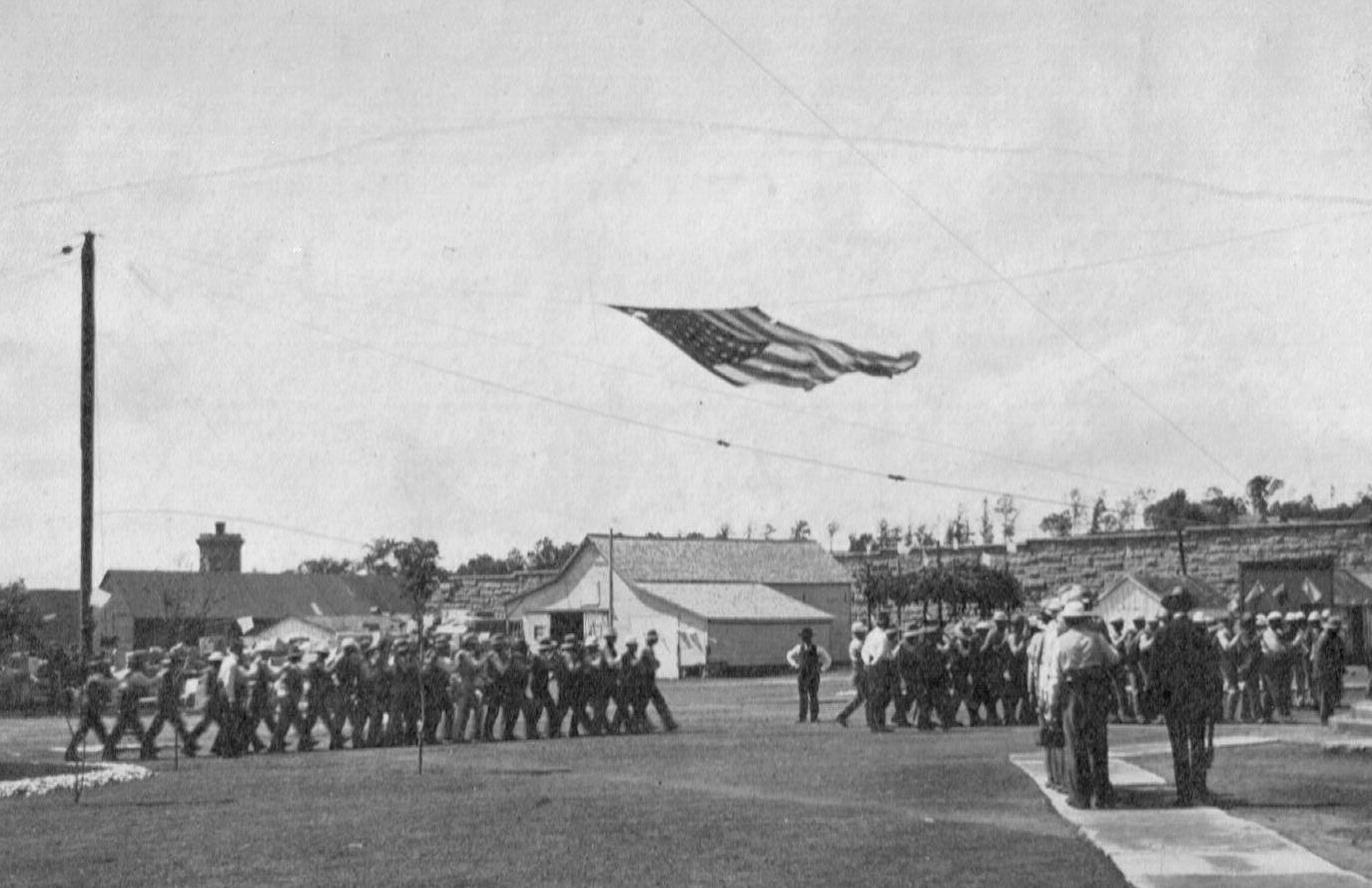
The Lockstep
The dreaded lockstep was abolished after the prison became a Reformatory in 1907. The lockstep was used to move groups of inmates across the yard, and required individual inmates to place their hand on the shoulder of the man in front of them, matching his strides to his.
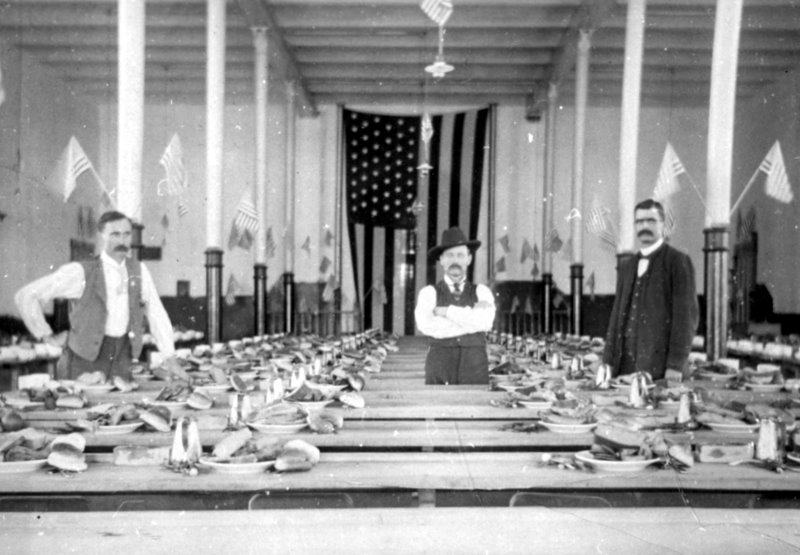
Holiday Meal?
When the Center Building was completed around 1898, the dining hall was permanently situated there, and remains in that location to this date. Here is a group of staff proudly presiding over the preparations for what appears to be a holiday meal, perhaps the Fourth of July.
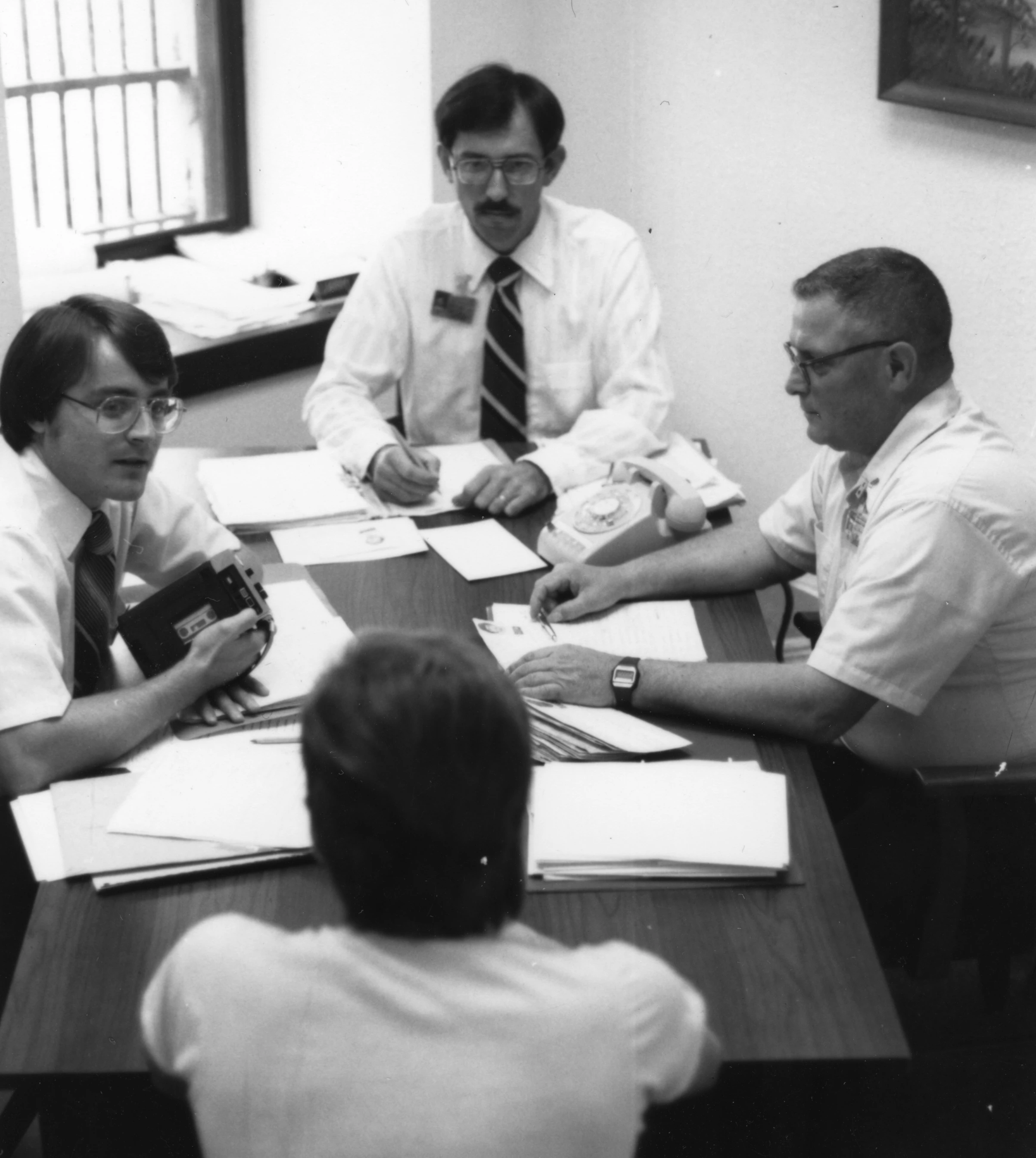
Classification
Incarcerated men are constantly evaluated and reevaluated to ensure proper management within the institution. Here, a classification committee visits with an inmate, one of many meetings he will have throughout his stay. Staff are (L-R): Steve Wendl, counselor; Larry Brimeyer, Team Leader; and Lloyd Petersen, Team Officer.
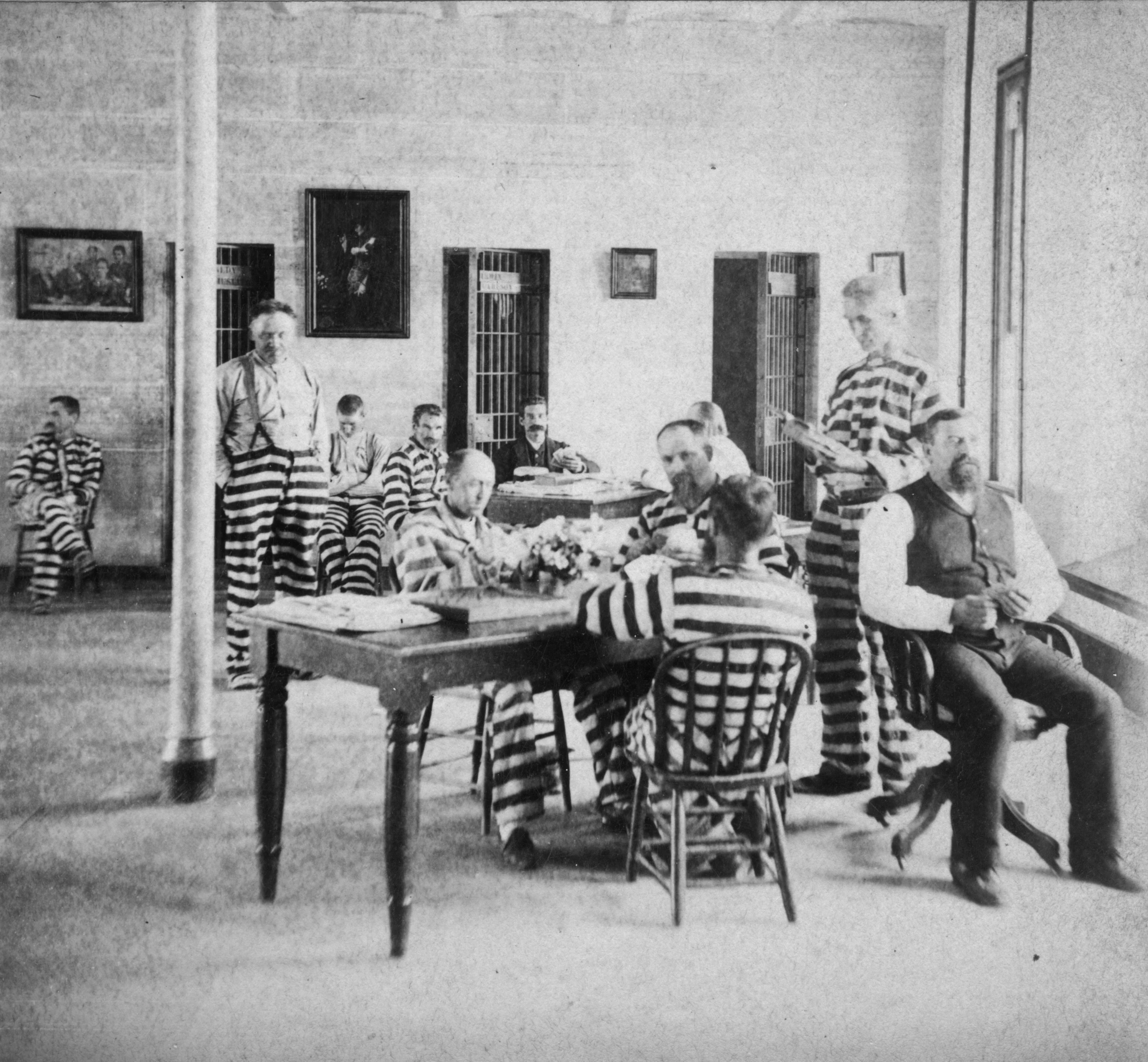
Playing Cards
This photo was likely taken in the Insane Ward. This was their terminology of the day. Mentally ill inmates could be transferred to this unit where they could remain indefinitely. Here a group of inmates plays cards on the ward, while the guard tries hard to appear uninvolved. The cards in his hand give him away though.
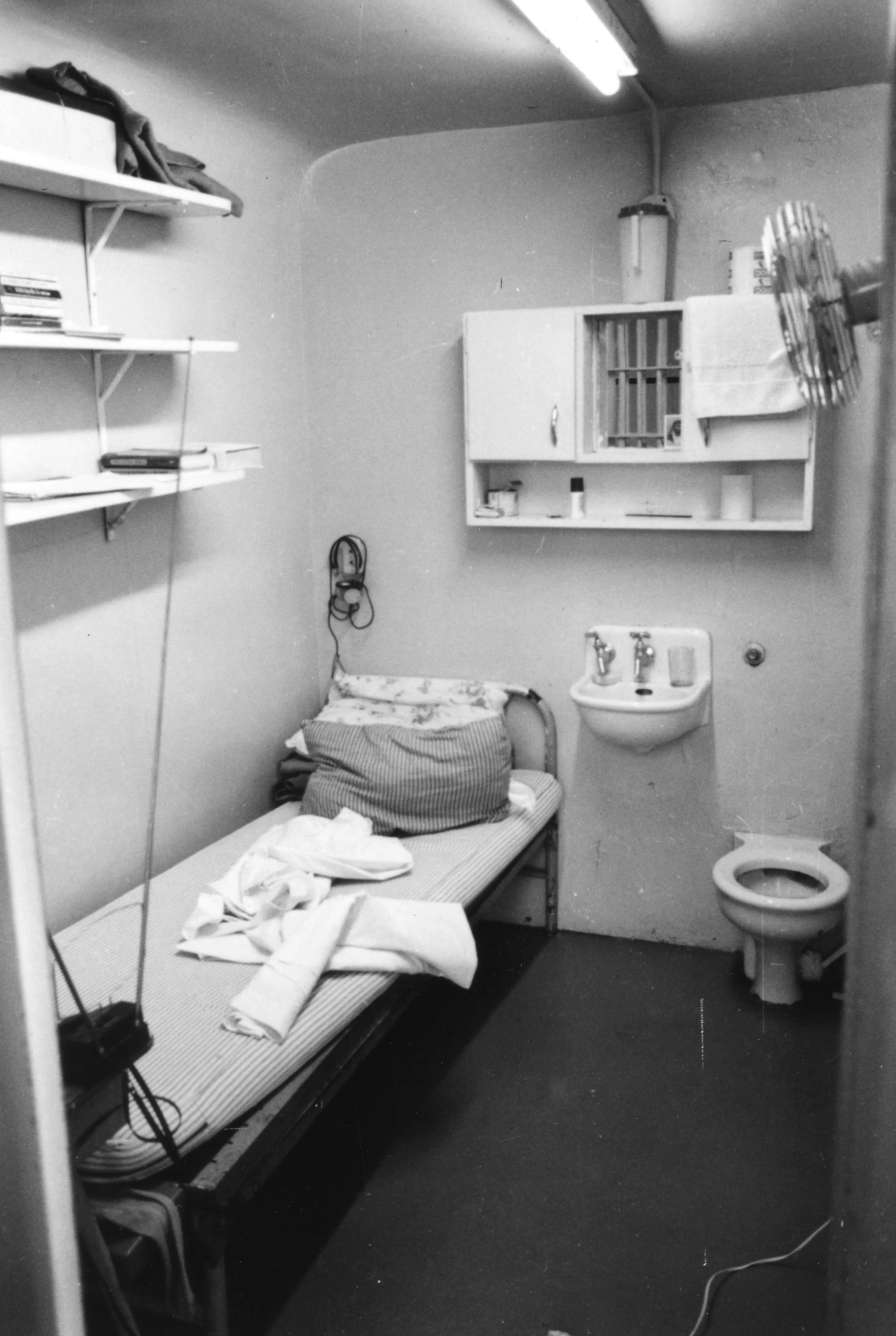
The Cell
Inmates rightly call their cell their "house," since it's where they reside when not working, going to activities, or out in the yard. Inmates in prison like Anamosa generally have more freedom of movement around the facility than TV and movies depict. In many cases, inmates have a cellmate, depending on the living unit.
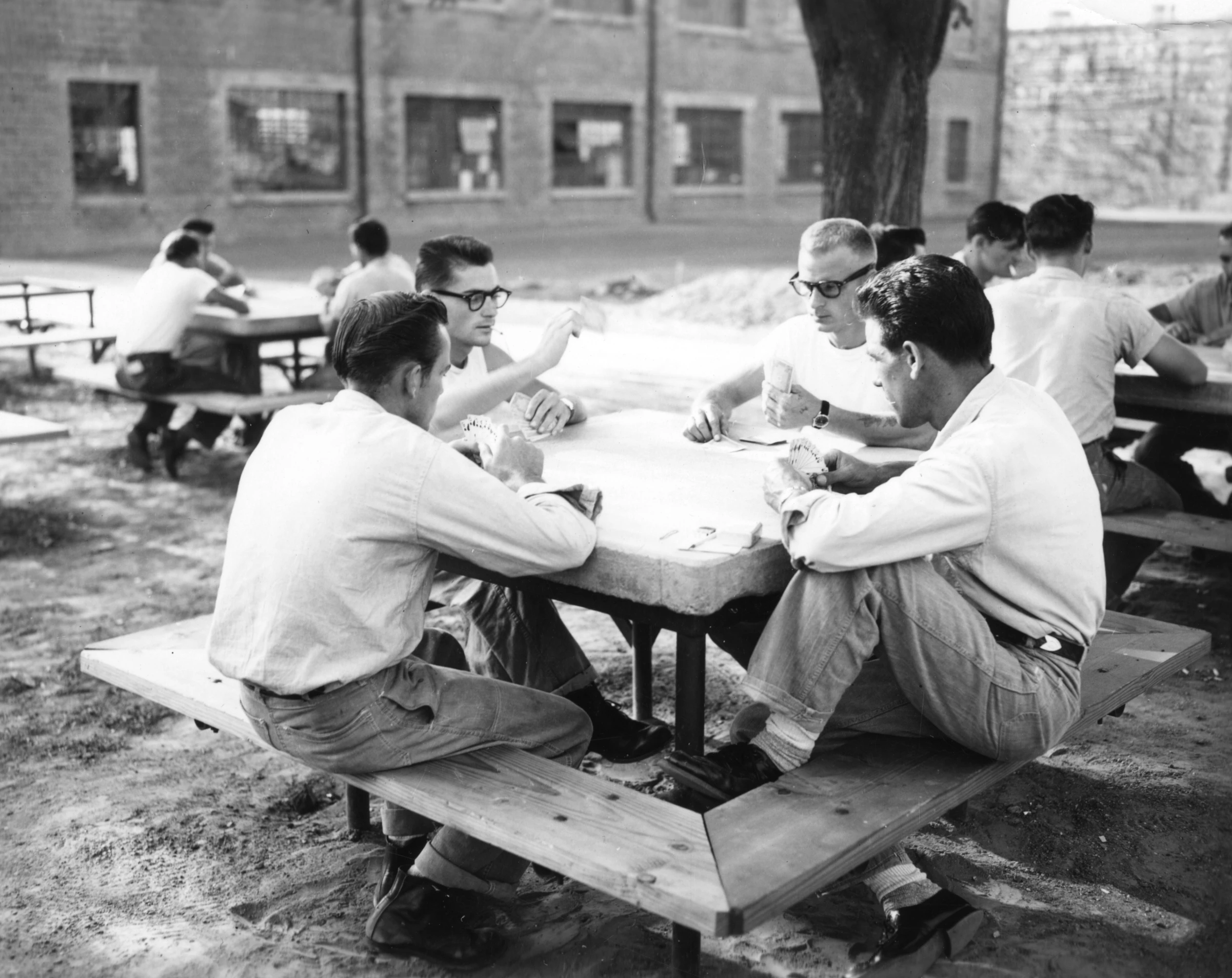
Lower Yard
Permanently fixed tables provide a good place to chat, play dominos, or have a game of cards.
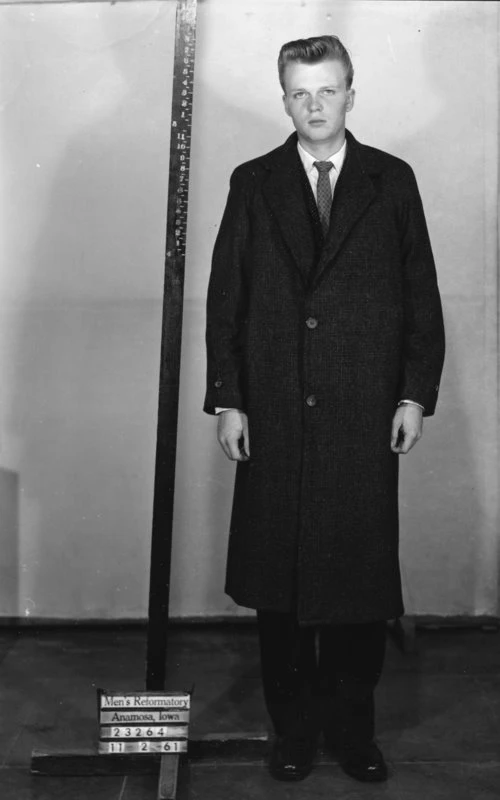
Departure Day
Inmates who have completed their sentence have typically been given a suit of clothes and a small sum of money to help them get started in their new life.
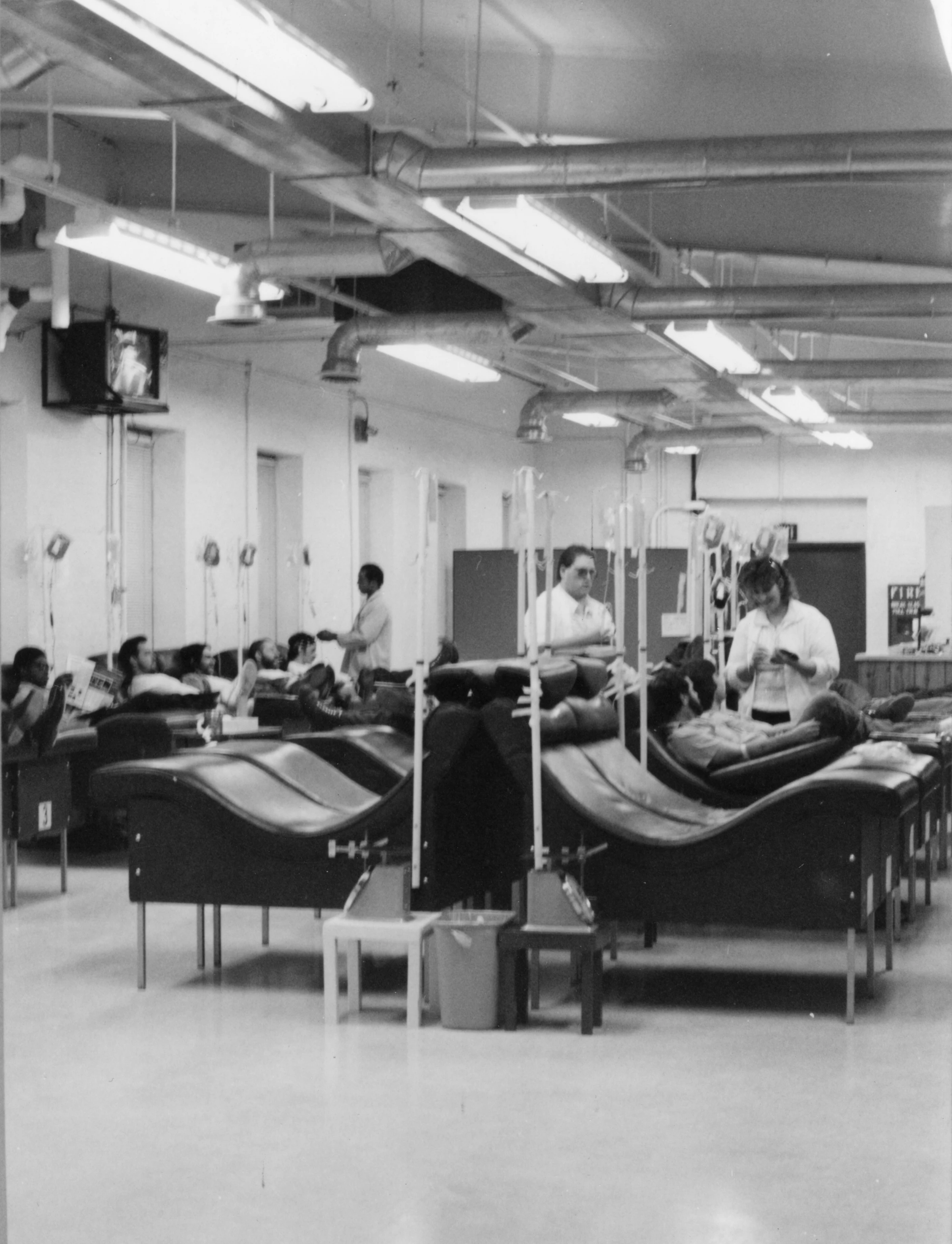
Plasma Donation
Prisons have long walked the tightrope of partnering with private businesses and trying to avoid competing unfairly, since they have a steady supply of low-paid, captive workers. In this photo, we see a short-lived opportunity for inmates to earn extra money donating plasma. When the HIV epidemic came on the scene, however, the operation was quickly discontinued.
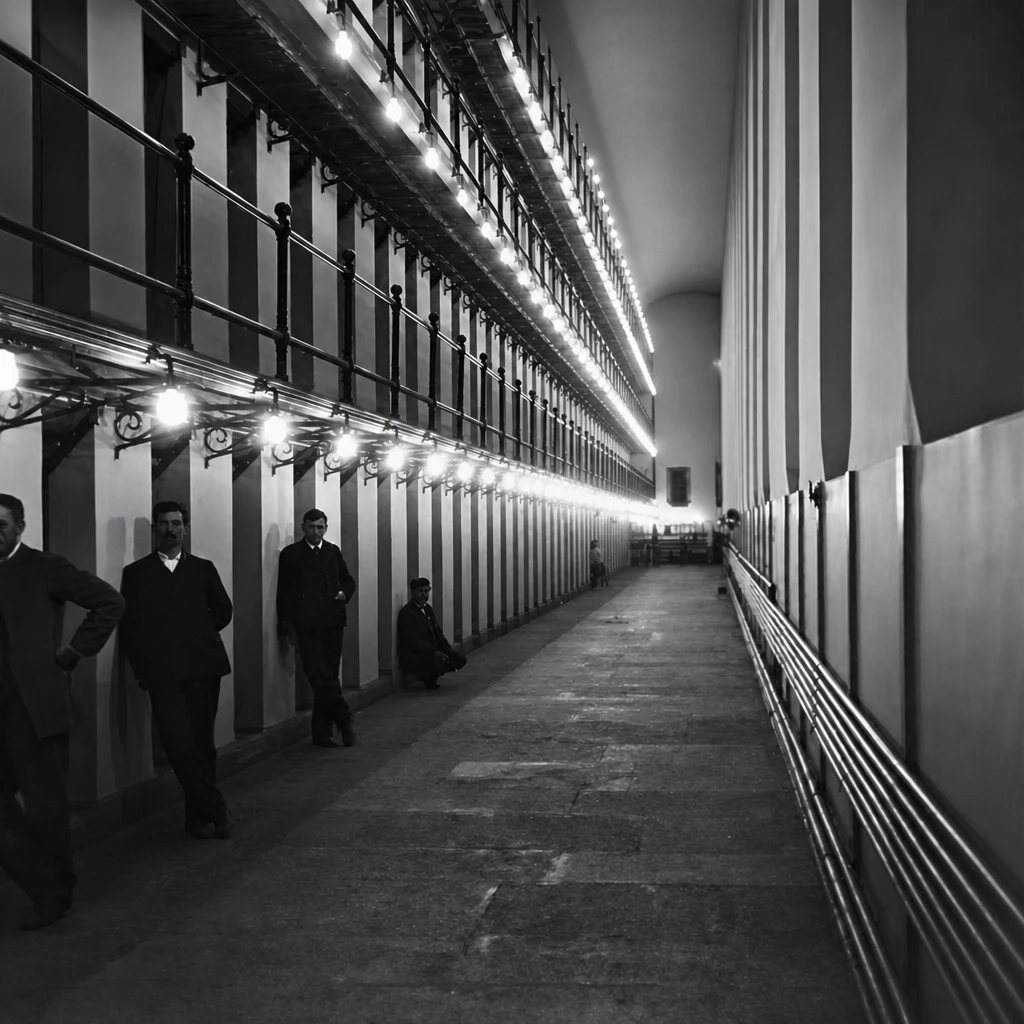
The Cell Block
The institution used to have three major cell blocks, but after the demolition of the North House cell block in the 1970s only two remain. This was the original one, four tiers high. It was electrified circa 1885.
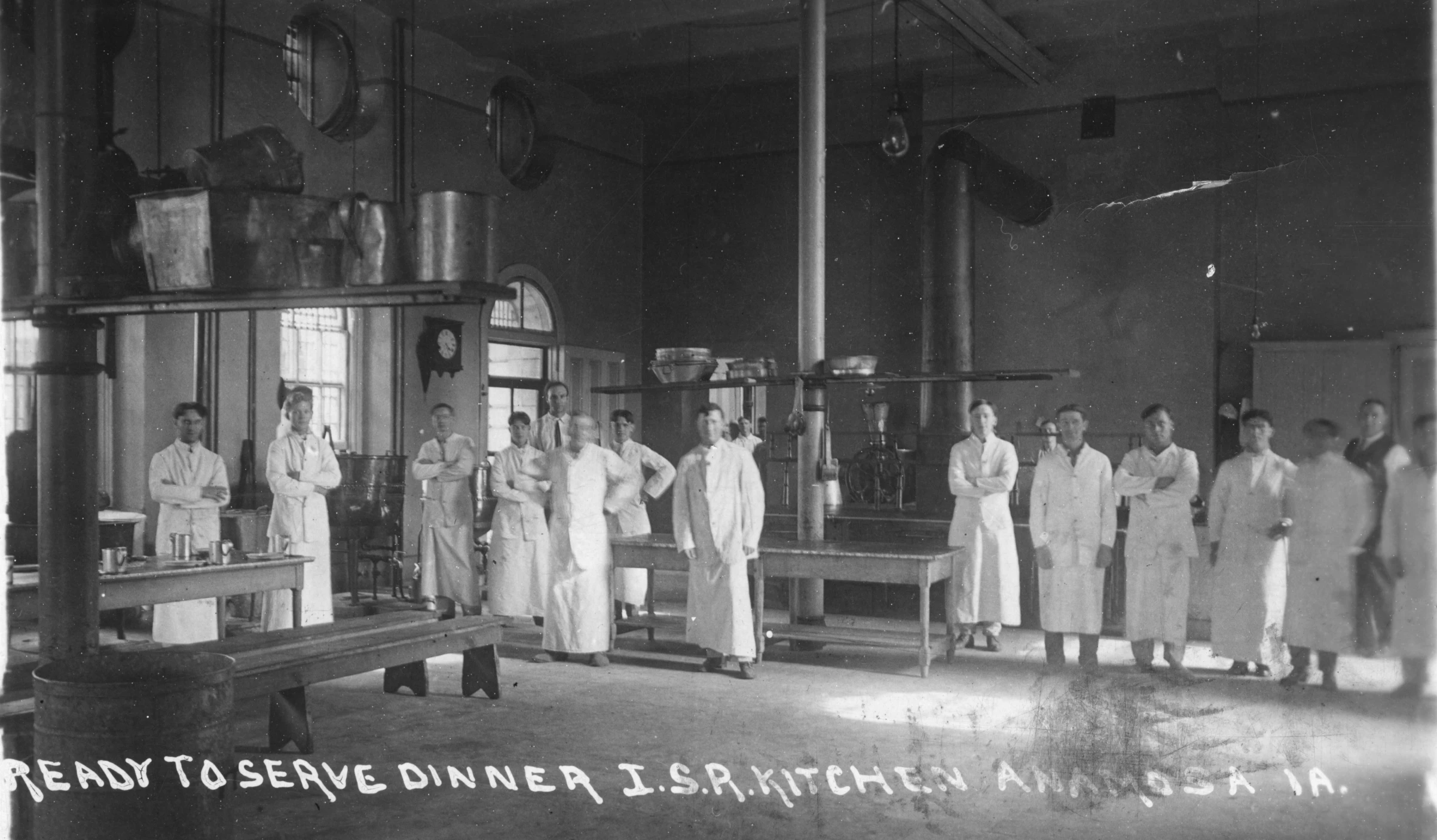
The Kitchen
In any prison, the kitchen is among the most important places in the entire facility. Good, nourishing food can help keep the peace. Bad food can do just the opposite. These men are ready to serve one of the 140,000 meals served since the institution was founded.
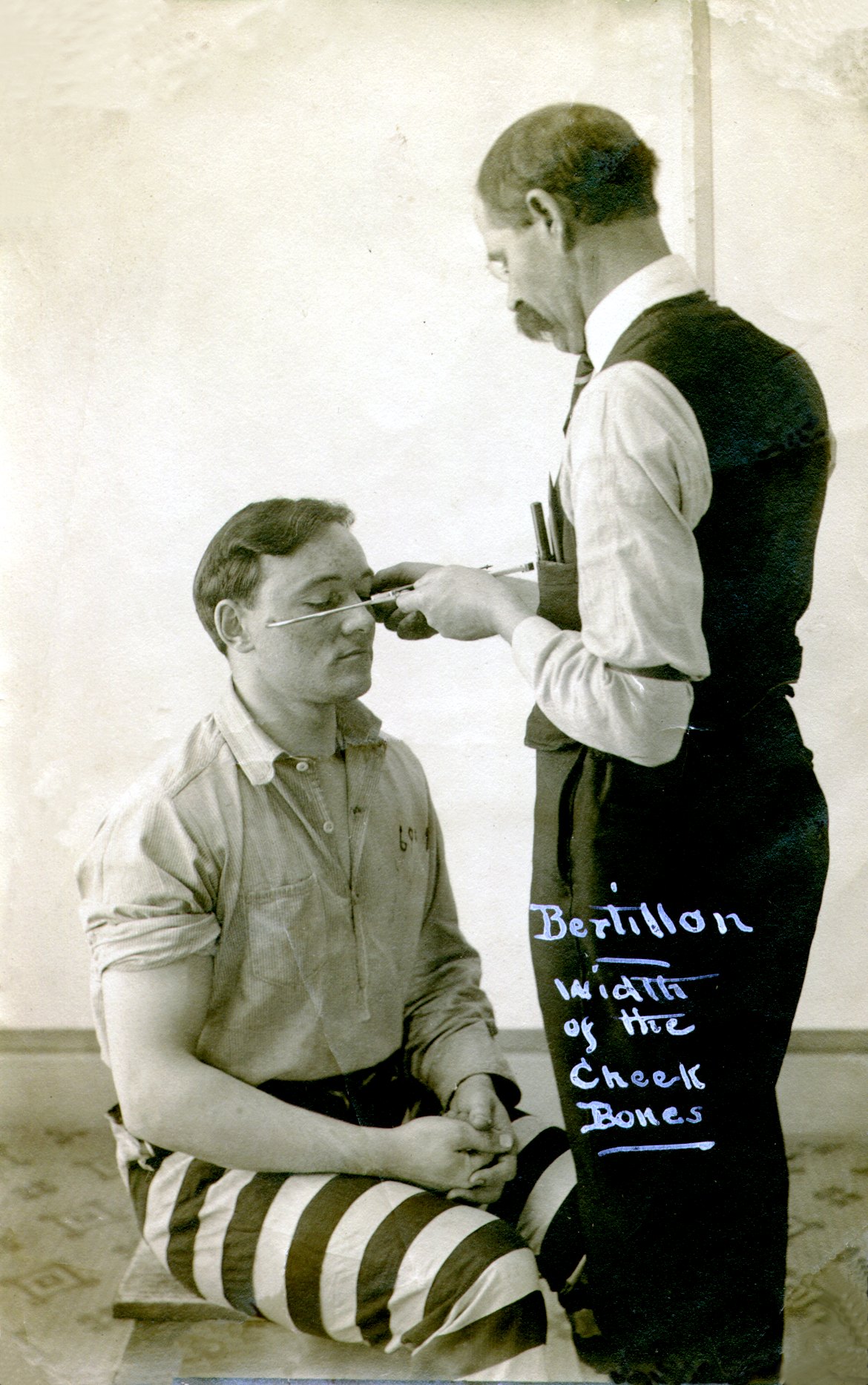
The Bertillon System
Invented by a French policeman and researcher, the Bertillon system, which bears his name, was a system of identification based on physical measurements. It was adopted at Anamosa and used until the advent of fingerprinting.
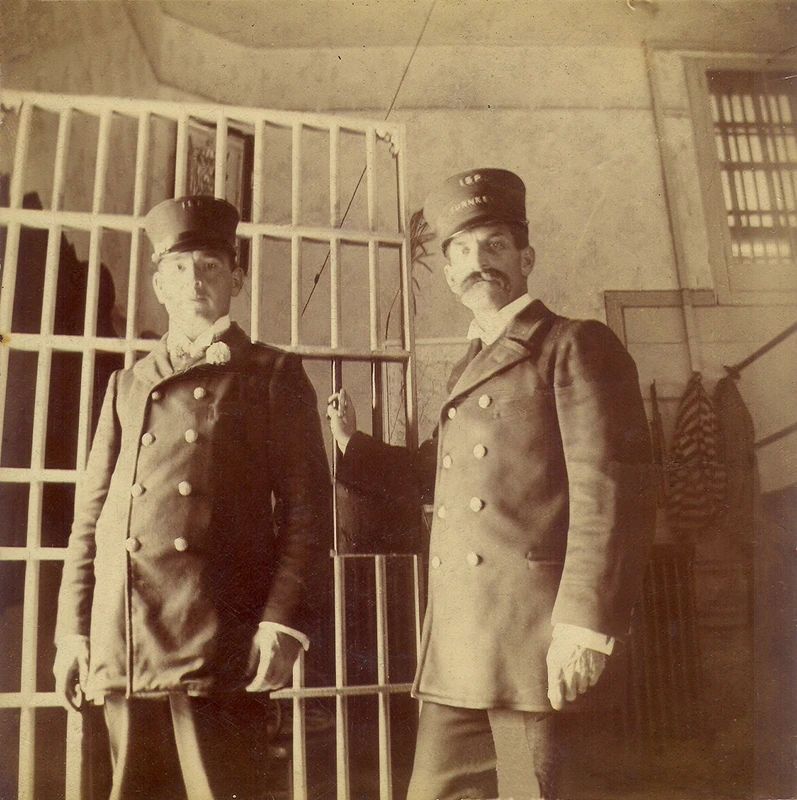
Officers, bars, and keys
The constants in life might be death and taxes, but in prison, the inmate can't go anywhere without encountering guards, bars, gates, and keys.
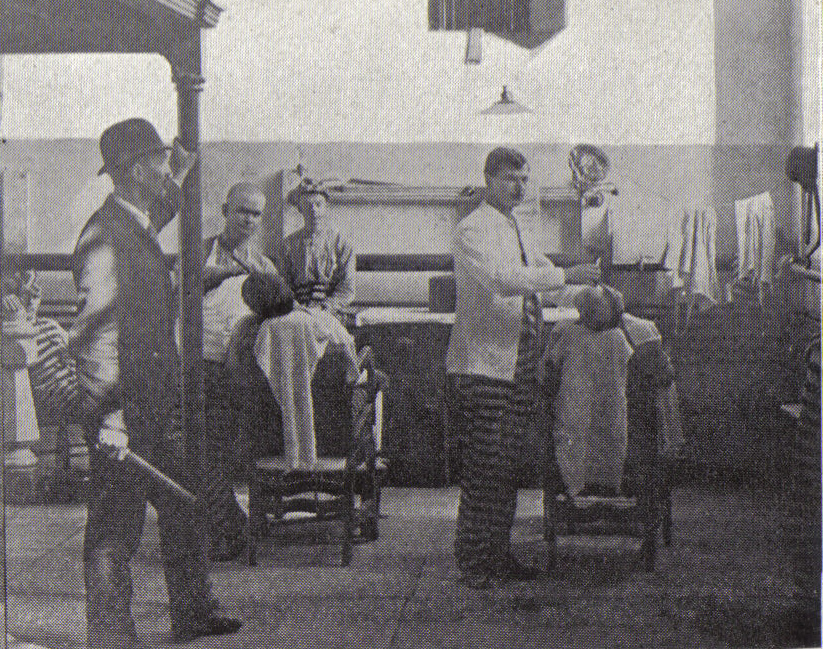
Haircut and Shave
Hair still needs to be cut in prison. An officer, with his standard issue truncheon at the ready, observes.
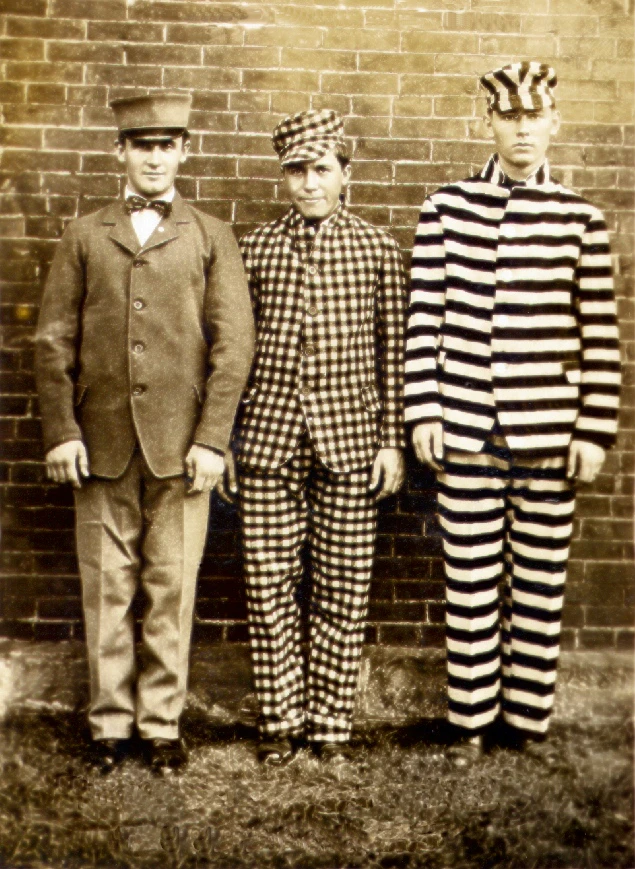
The Grade System
One of the earliest methods of rewarding good behavior in prison was earning the privilege of NOT having to wear the dreaded stripes. As the image suggests, inmates could eventually wear a normal looking set of clothes.
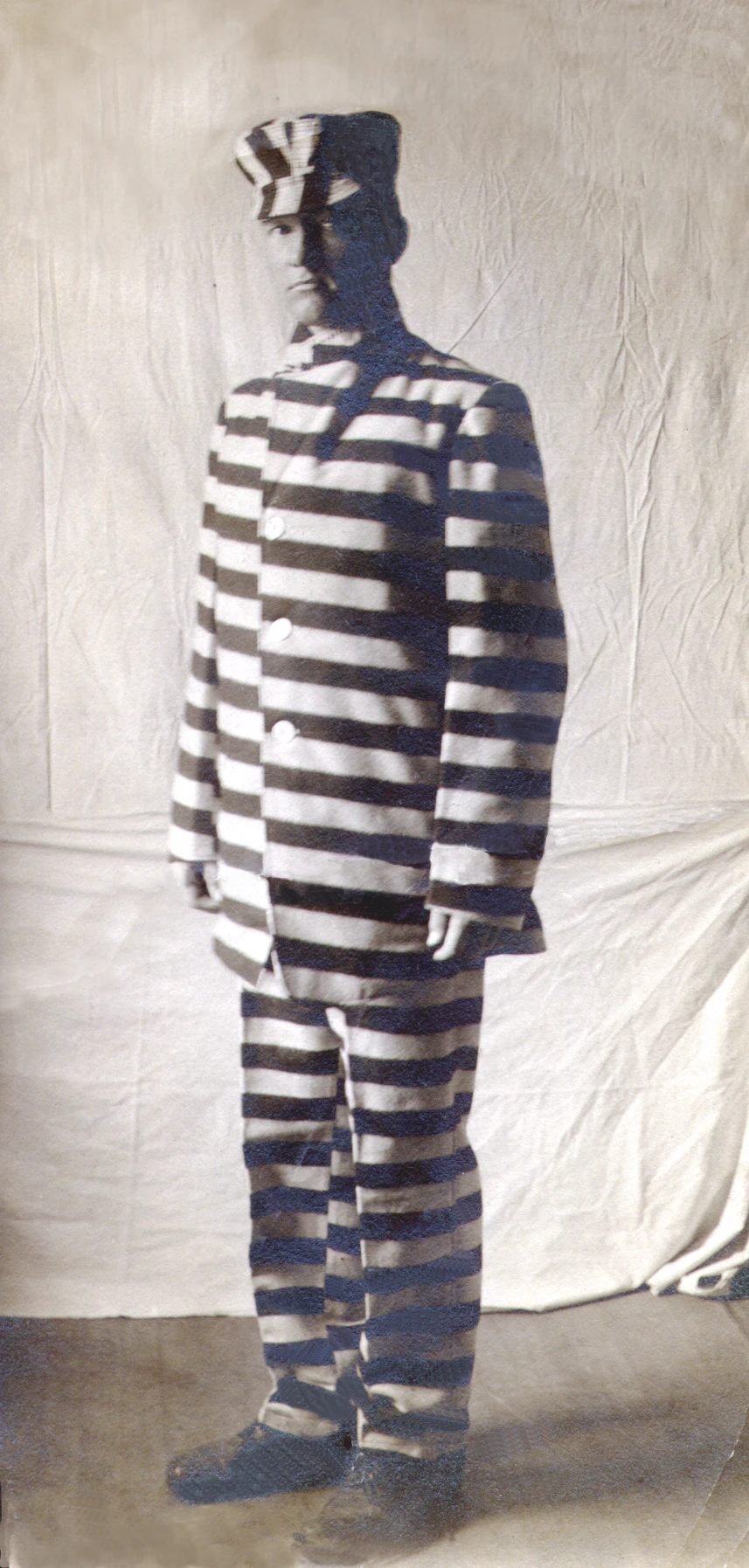
The Third Grader
No, that's not a statement about his educational level, but rather his placement within the prison's privilege system. You start at the bottom, wearing the full striped uniform, as modeled by this glum looking fellow.
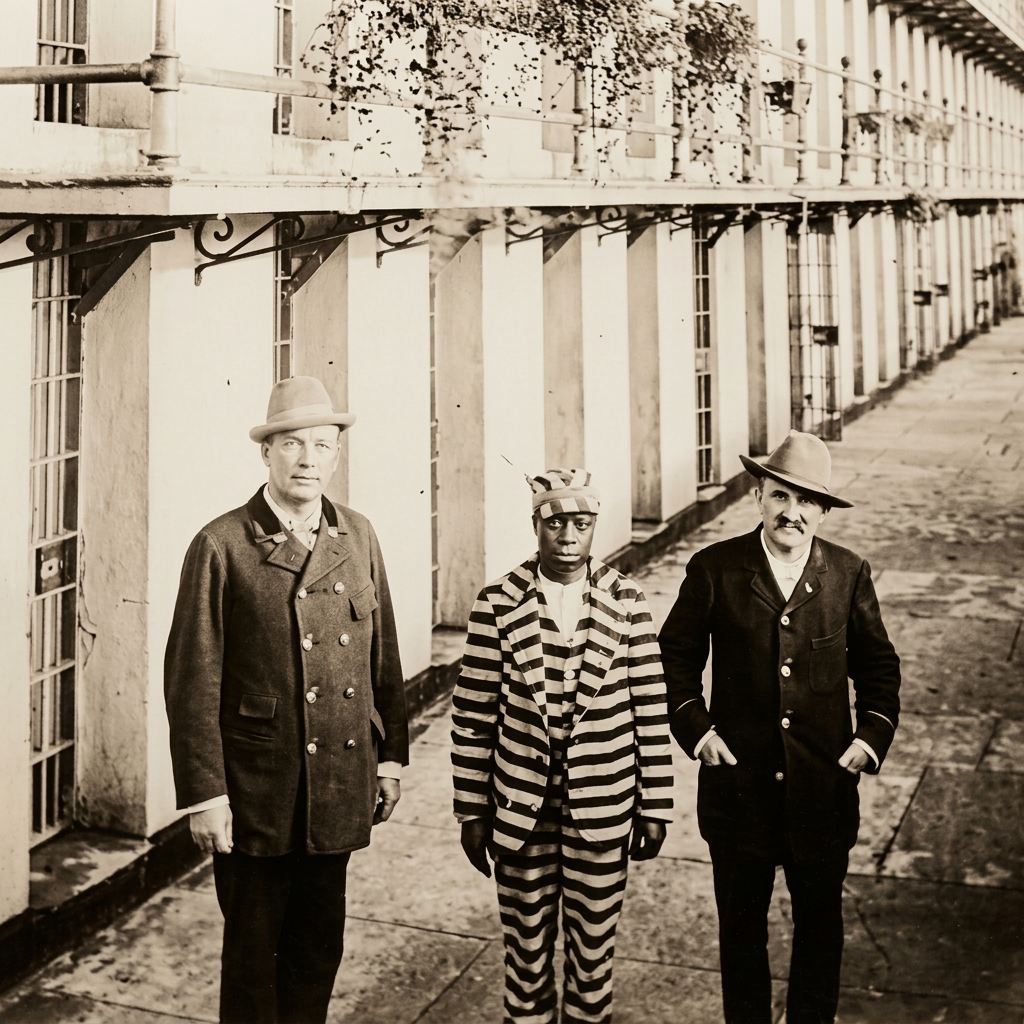
3rd Grade Stripes
The cellhouse used to have vines growing on the railings. Not sure why they thought that was a good idea.
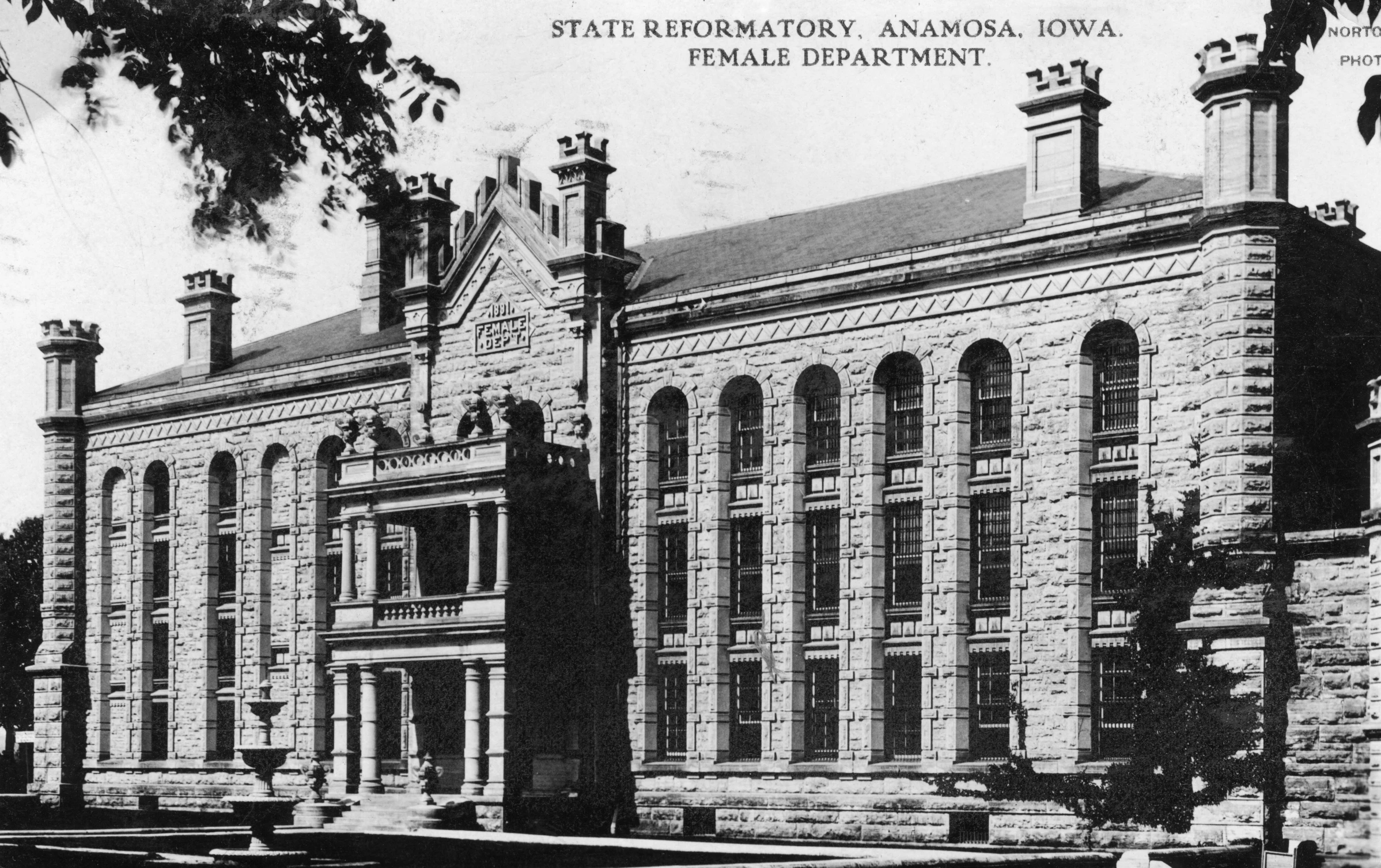
Female Department Building
The building of this magnificent structure cost three inmates their lives. It served as Iowa's women's prison from its opening in the late 1890s until the Women's Reformatory was finished in 1918. The two story front porch was removed in the 1970s due to its deteriorating, unsafe condition.
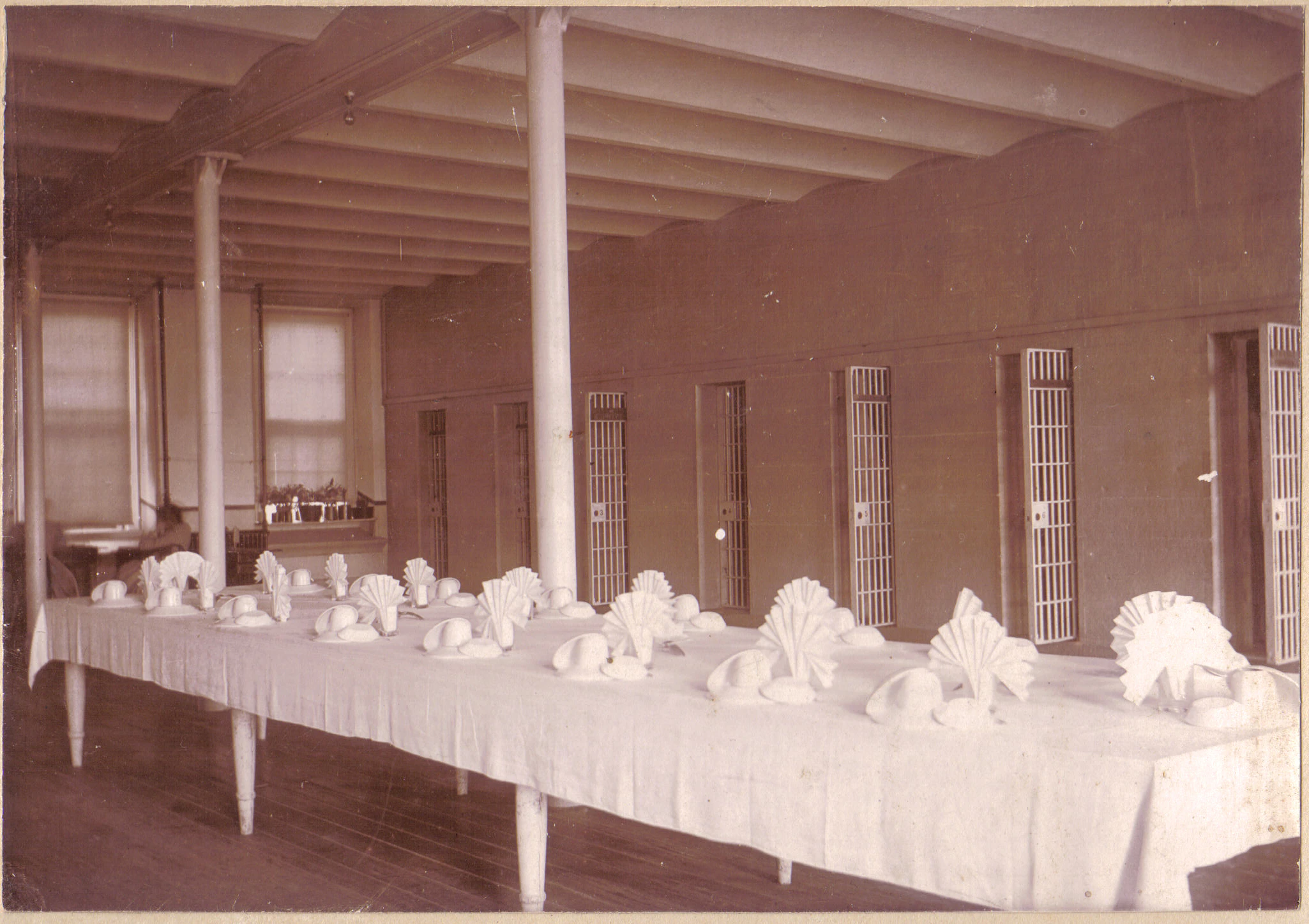
Female Department Finery
An ornately set table to celebrate some occasion in the Female Department.
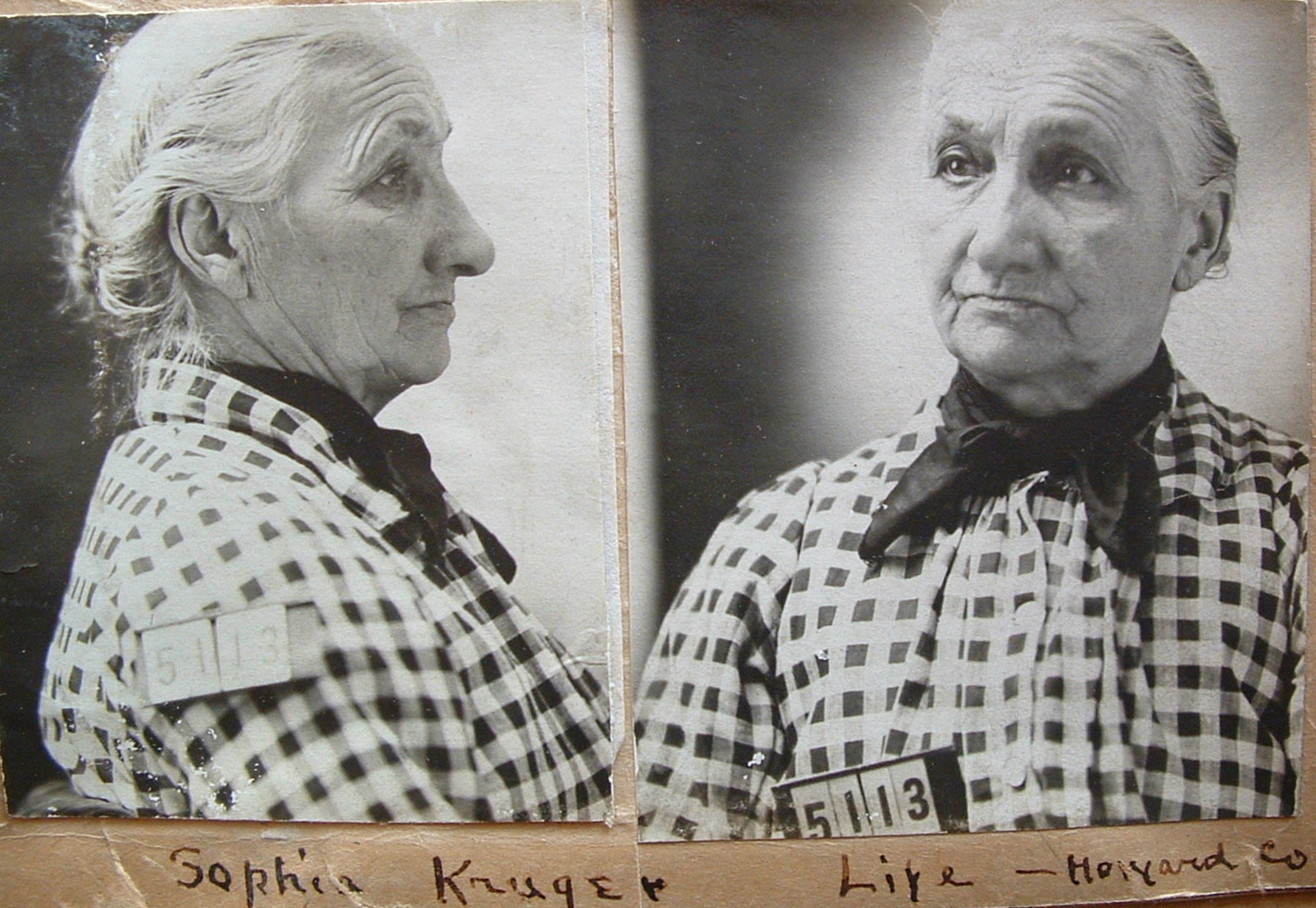
Mugshot - Sophia Kruger
Kruger was convicted of the pick-axe slaying of her husband and sentenced to life. She arrived at Anamosa at age 61 where she remained for the next 15 years. When the Women's Reformatory was opened in Rockwell City in 1918, she transferred there. She died in November 1923 and is buried in the prison cemetery in that city.
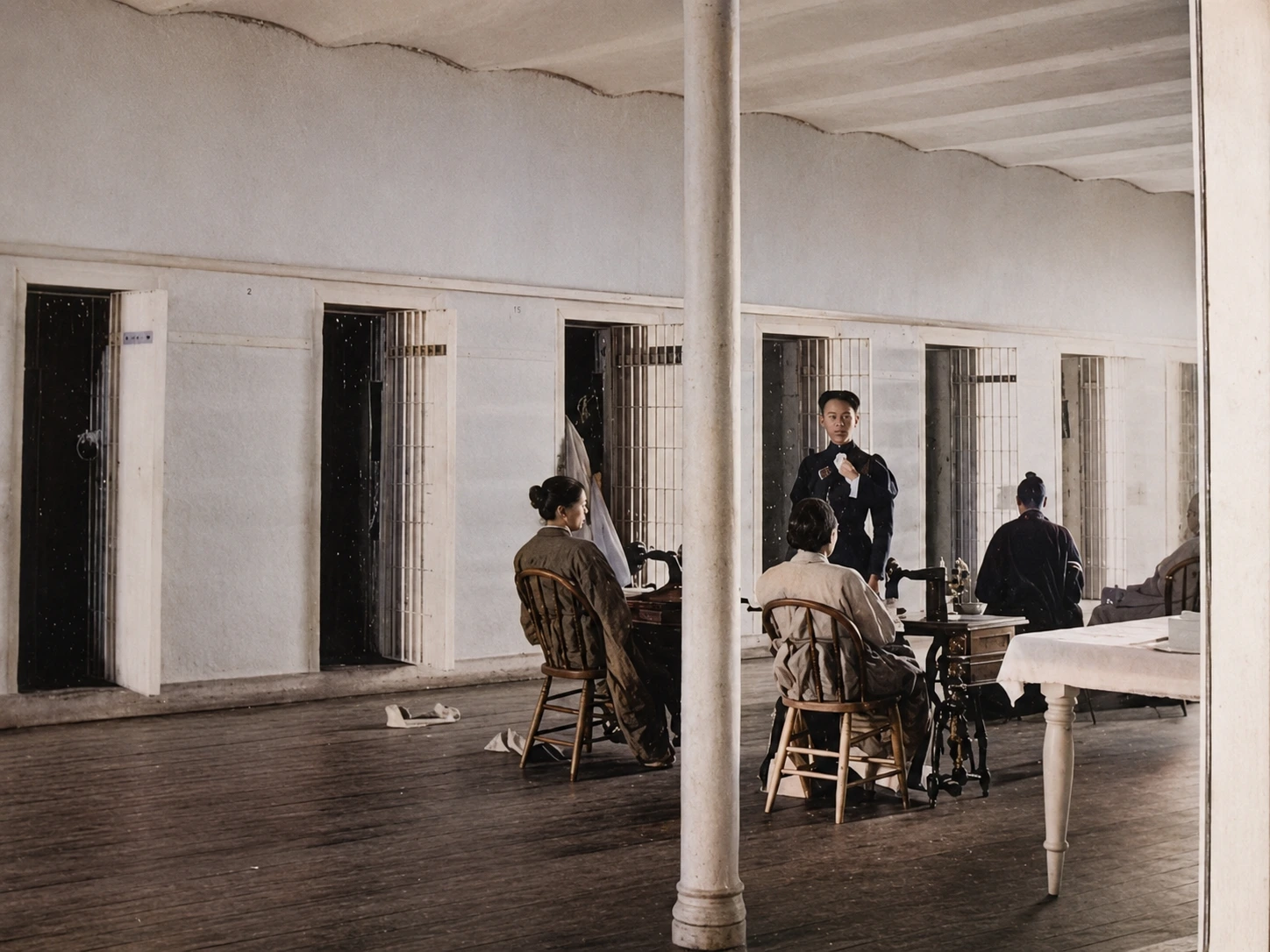
Sewing Piece Work
Very few photos exist of the Female Department at Anamosa, which housed a total of approximately 350 women during the years 1880 - 1917, when the Women's Reformatory was opened in Rockwell City. Job assignments for the women generally involved sewing, meal preparation, and nursing care for the warden's children when needed.
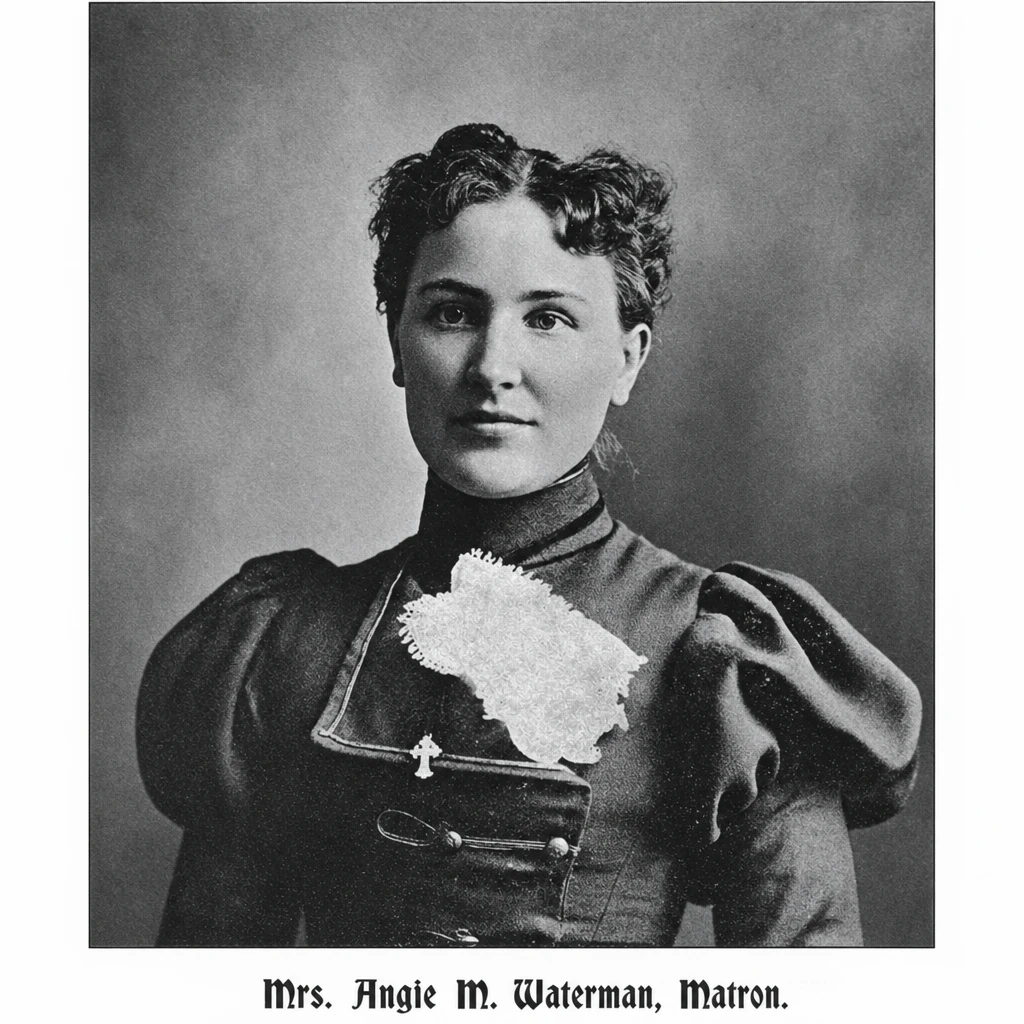
Angie Waterman, Matron 1898 - 1904
Ms. Waterman was keenly aware of how differently society viewed female prisoners. In her book "Prison Work Among Women: Can They Be Reformed?" she says, "Usually a woman convict is considered one of the lowest of God's creatures -- if, in truth, she is supposed to belong to Him at all -- for it is a well-known fact that society always considers a fallen woman a thousand times more depraved and contemptible than the self-same character of the masculine gender."
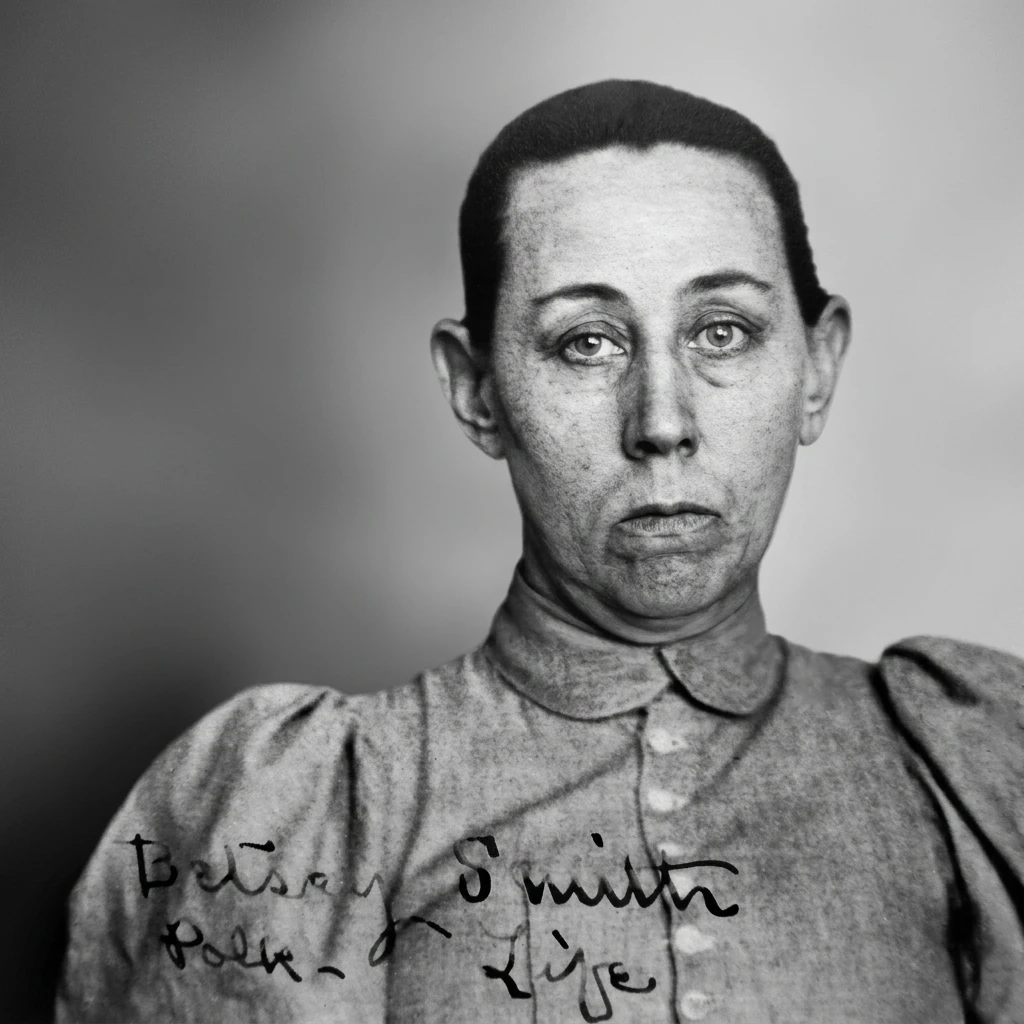
Betsy Smith
Betsy Smith and her daughter, Cora, were both convicted of murder. They were allowed to be cellmates at Anamosa. Cora committed suicide by ingesting poison in 1898. Her mother woke to find her daughter's lifeless body. Cora is buried in Riverside Cemetery in Anamosa. No female inmates were ever buried in "Boot Hill".
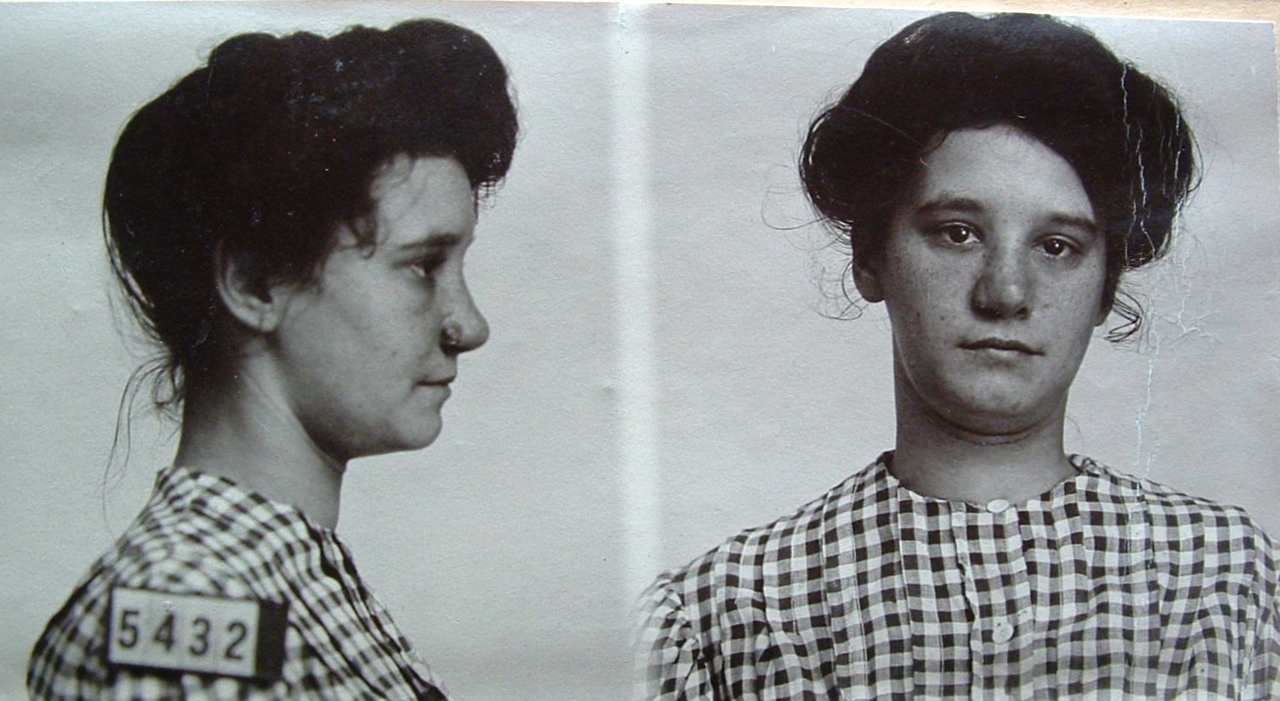
Mugshot
Although female inmates could be incarcerated for the same crimes committed by men, crimes such as Adultery, Prostitution, and Keeping a House Of Ill Fame were convictions heavily skewed towards female prisoners.