At Hard Labor
Prison Work Programs
In the movies the judge pronounces sentence on the newly-convicted felon, and sentences him to state prison "at hard labor." And although the days of breaking rocks is long past, the legal document committing a man to prison (the mittimus) still contains that language.
Finding meaningful work opportunities for the inmates is a challenge. Prison officials don't want to compete with private enterprise, since they have an unfair labor advantage. Most Anamosa inmates have worked inside the walls, helping with food, maintenance, sanitation, etc. Some work at more skilled jobs in the Iowa Prison Industries program. And over the years, Anamosa has sent minimum security inmates to various projects and camps around Iowa. The goal is always the same: promotion of good work habits and personal responsibility.
Working The Stone
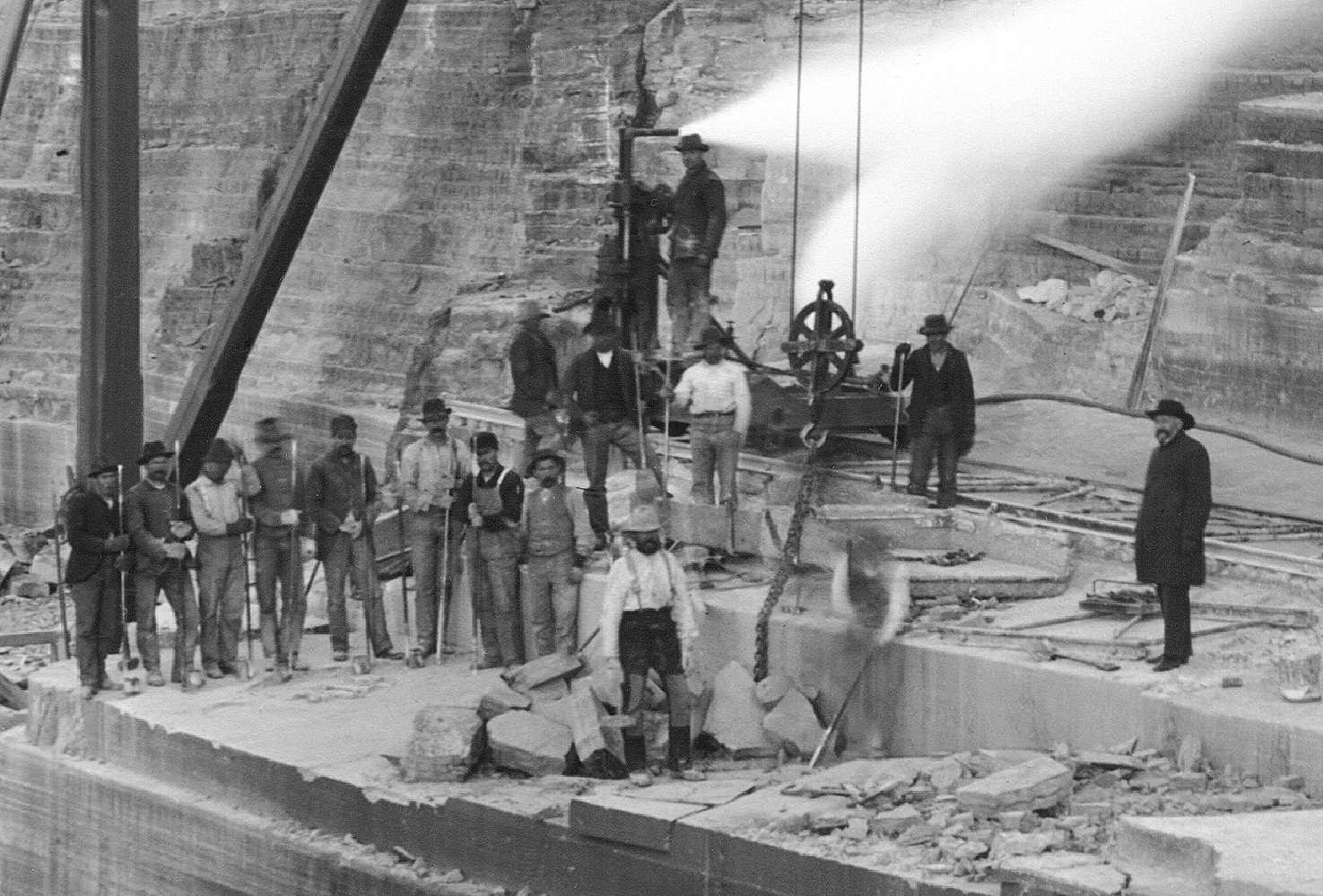
The quarry was the prison's first work assignment. Of the 20 men who first transferred to Anamosa from Fort Madison, twelve went straight to the quarry. There was a massive stone fortress to be built. It would take decades. And it all began here, with the stone.
Returning From The Quarry
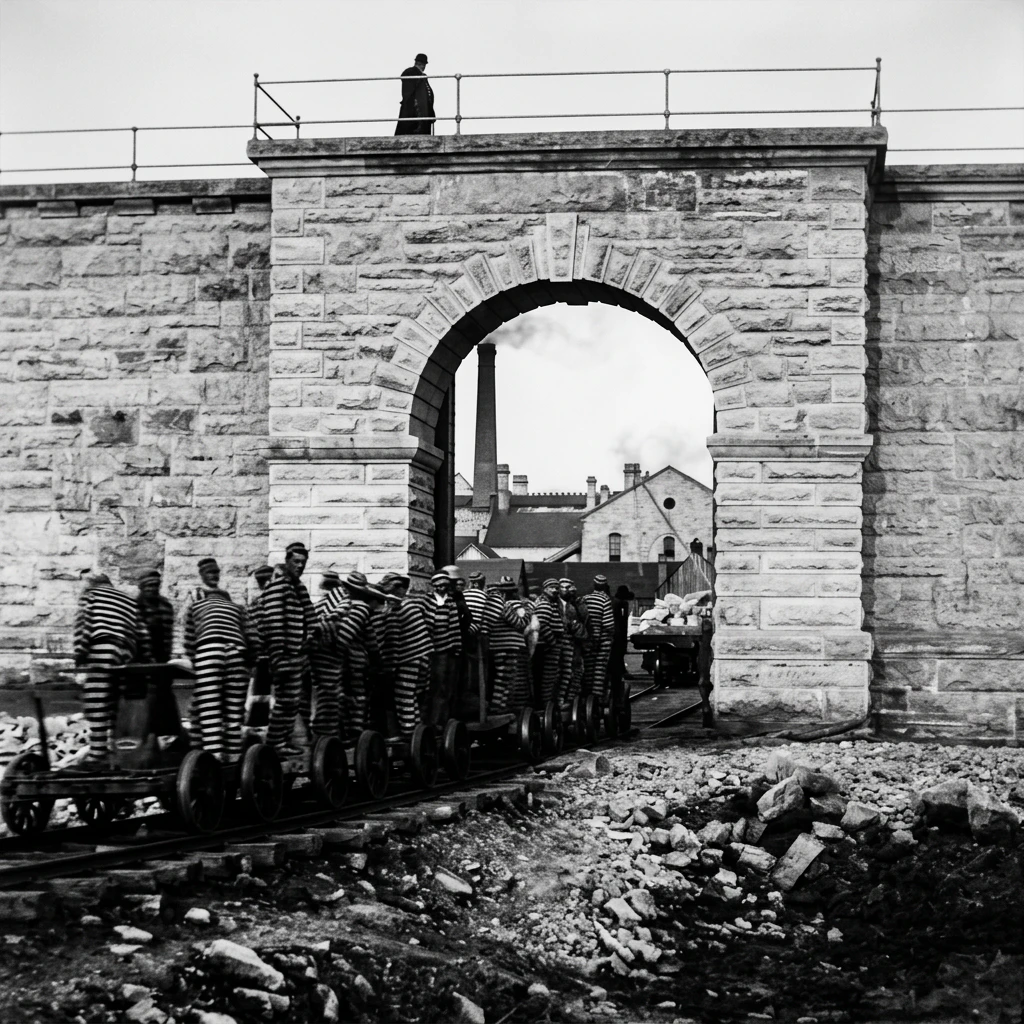
At the end of the day inmates came back to the prison via handcar on the rail line that connect the quarry and penitentiary.
Breaking Rocks
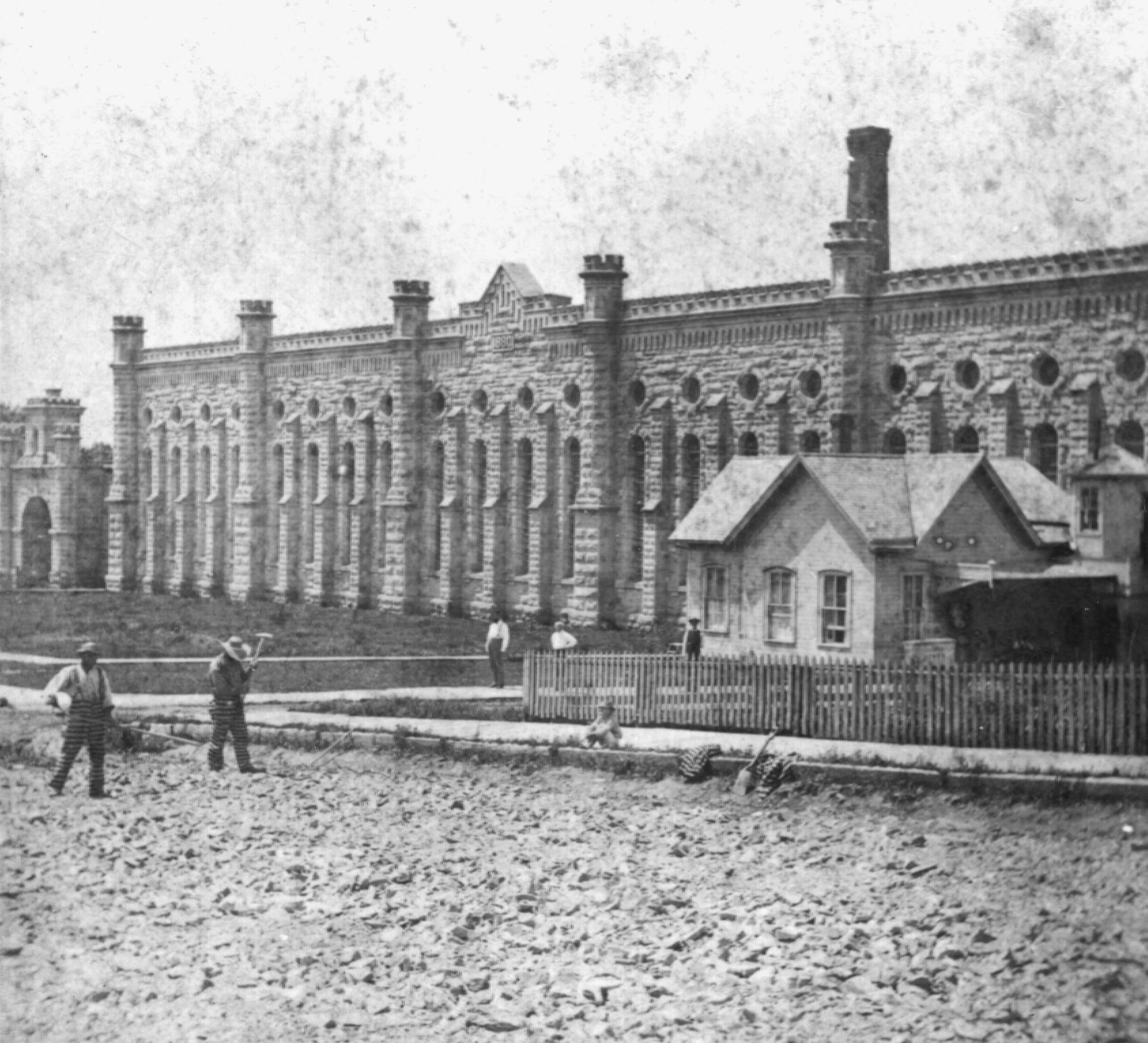
"Making little ones out of big ones" - the only photo we have of inmates breaking rocks. This is High Street, which runs directly along the front of the institution.
Butter Tubs
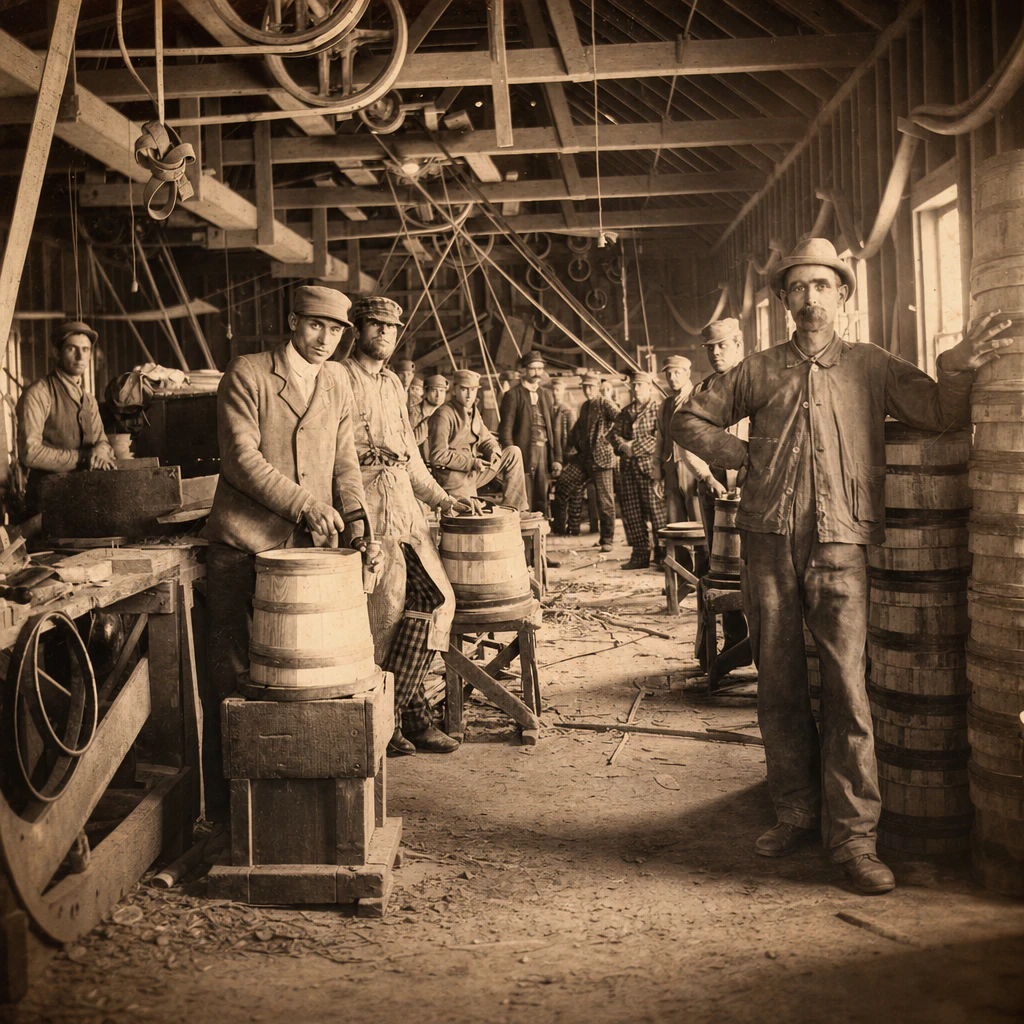
One of the first agreements the prison signed with a private firm was making butter tubs.
Making License Plates
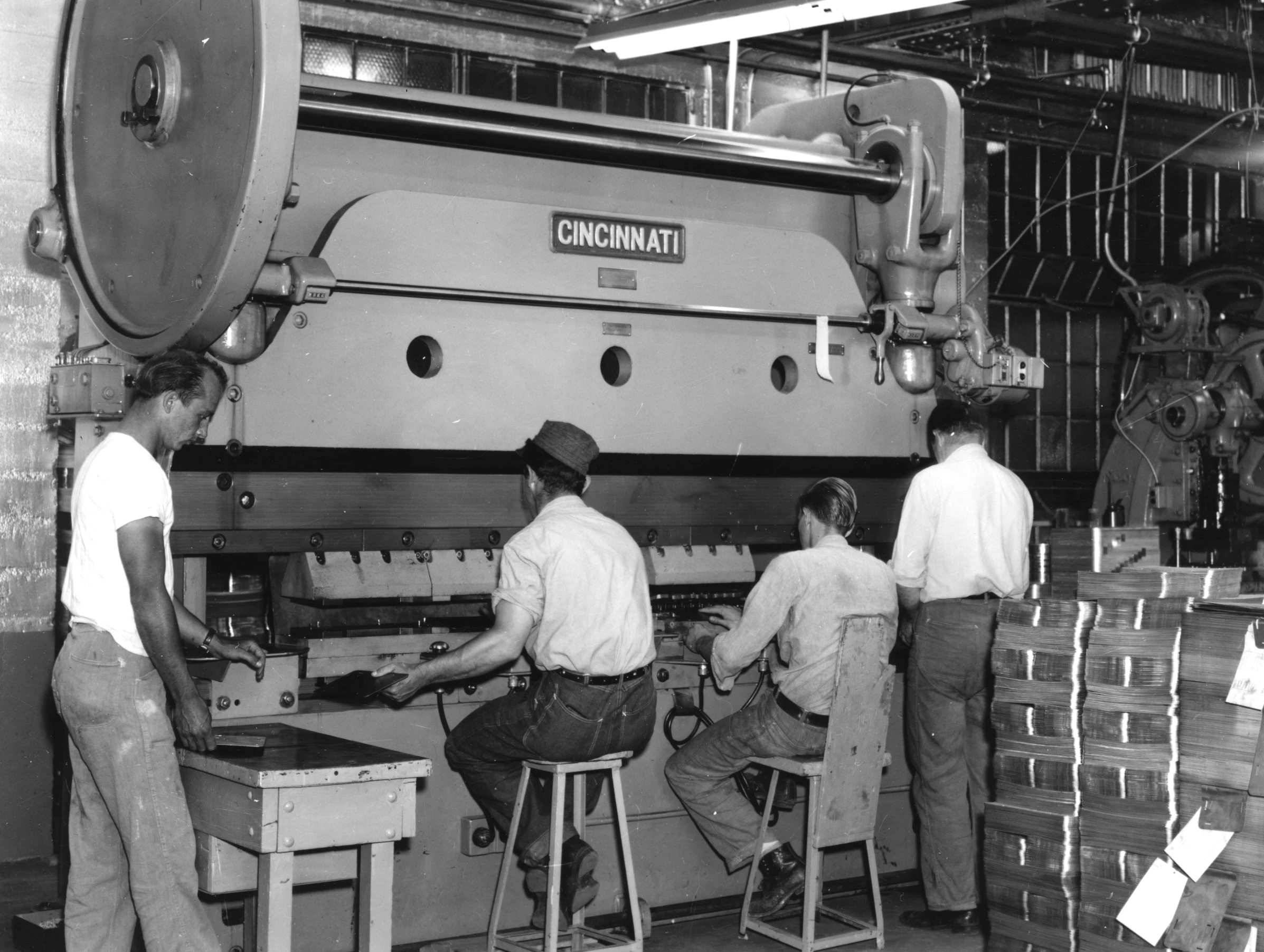
Making products for other state agencies is the bread and butter of prison industries, and making license plates has long been associated with prison work. Here, in Metal Stamping, massive presses indent the numbers on the plate. Nowadays, the process is largely digital with no stamping involved.
Tailor Shop
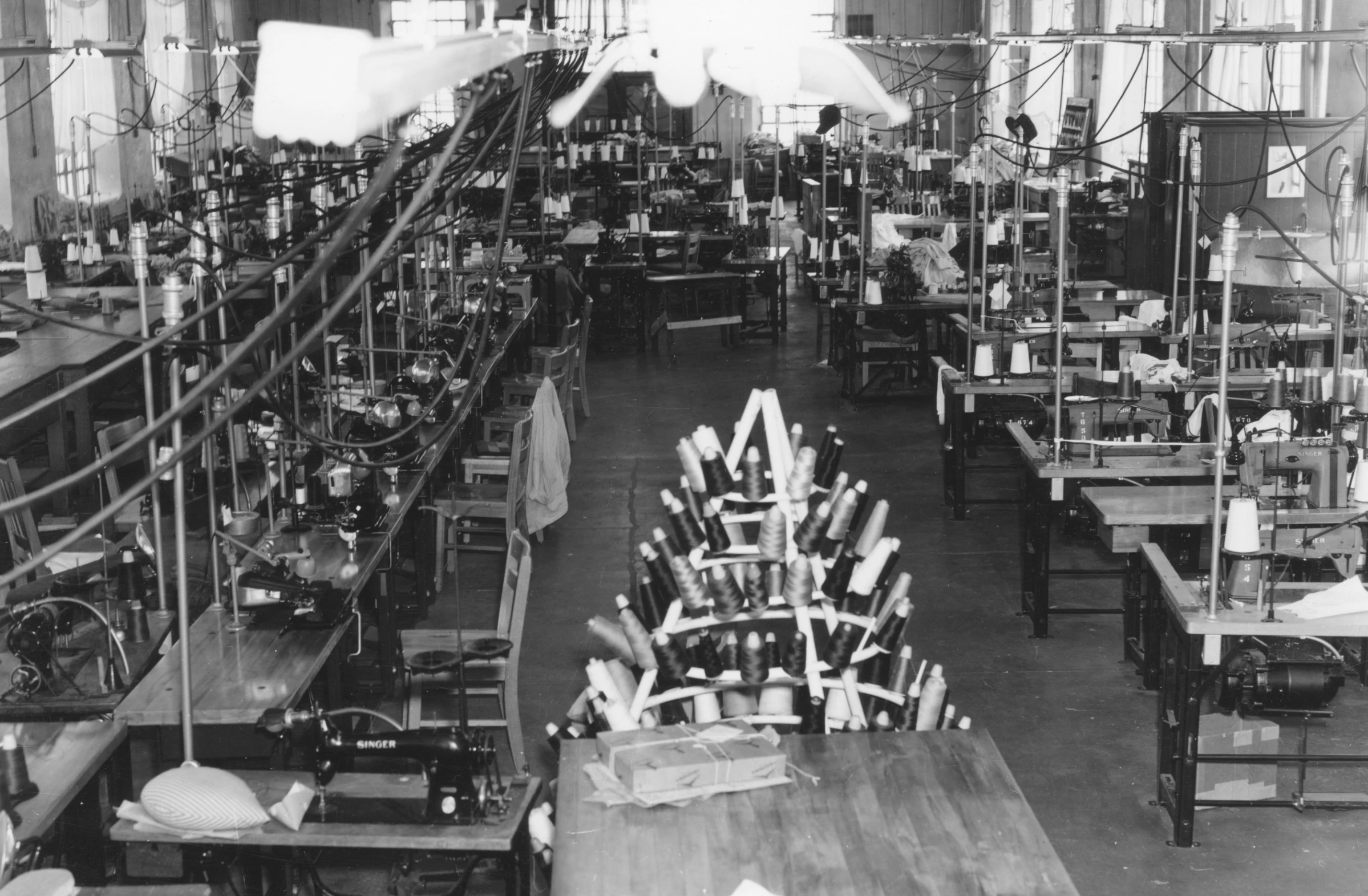
All manner of guard uniforms and prisoner garb were made and repaired here. This shop was where the 1963 riot began.
Foundry
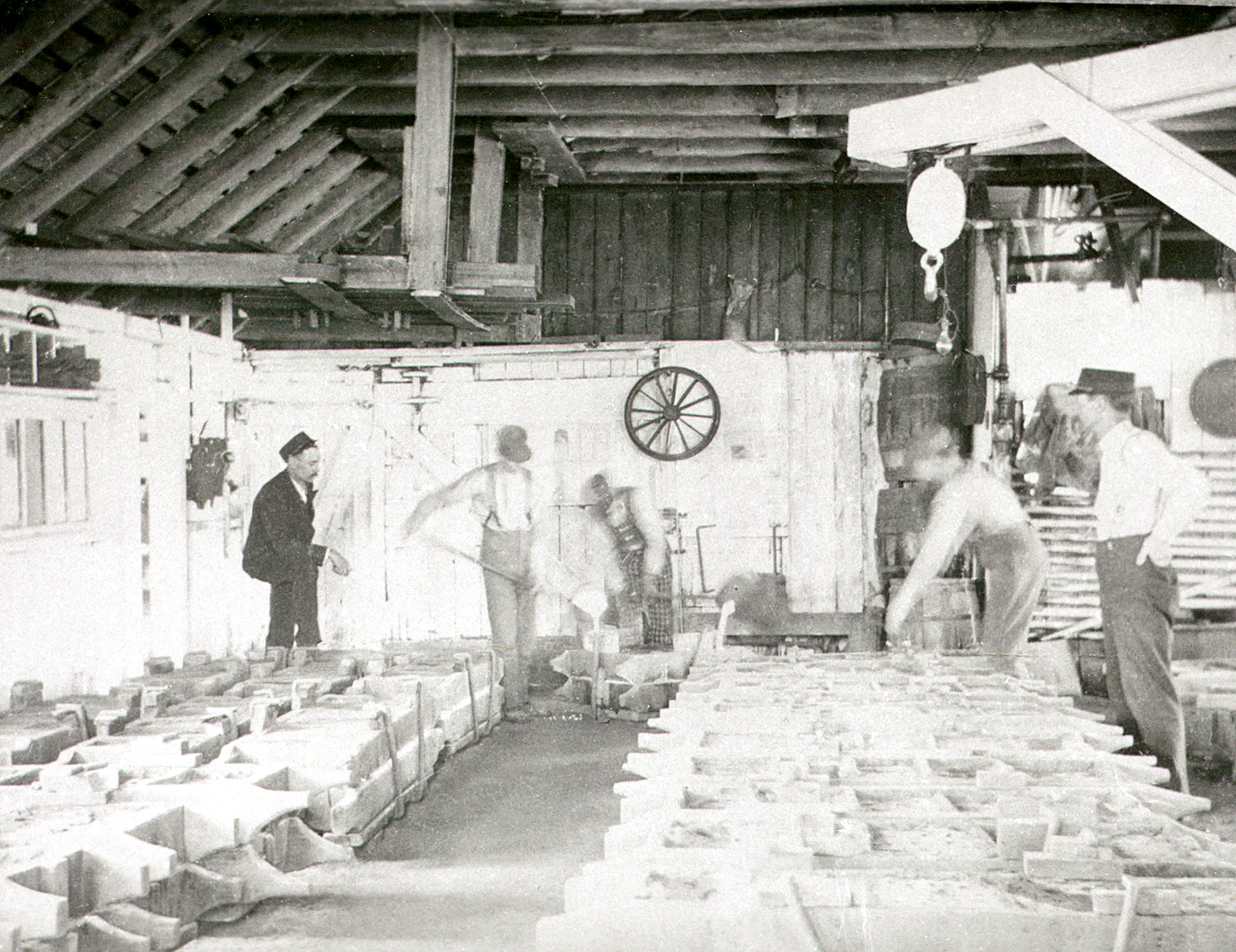
Exactly what was produced here is unknown to this writer, but I suspect fabricating metal items was pretty important during active construction, when things broke every day.
Meat Cutting
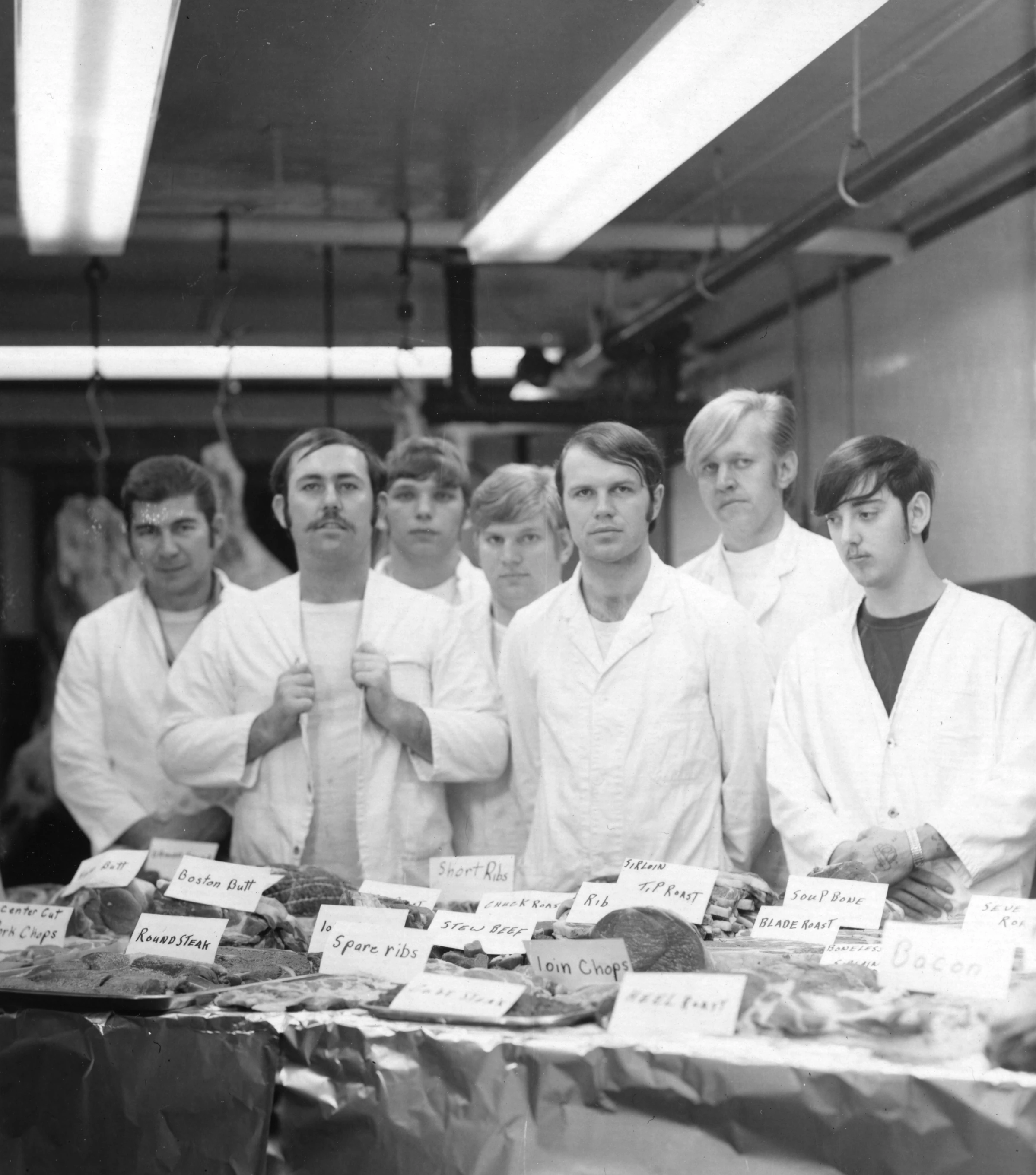
Inmates learn the various cuts of beef, much more important when we had our own slaughtering operation. The farm operation is much reduced now (see Farm segment).
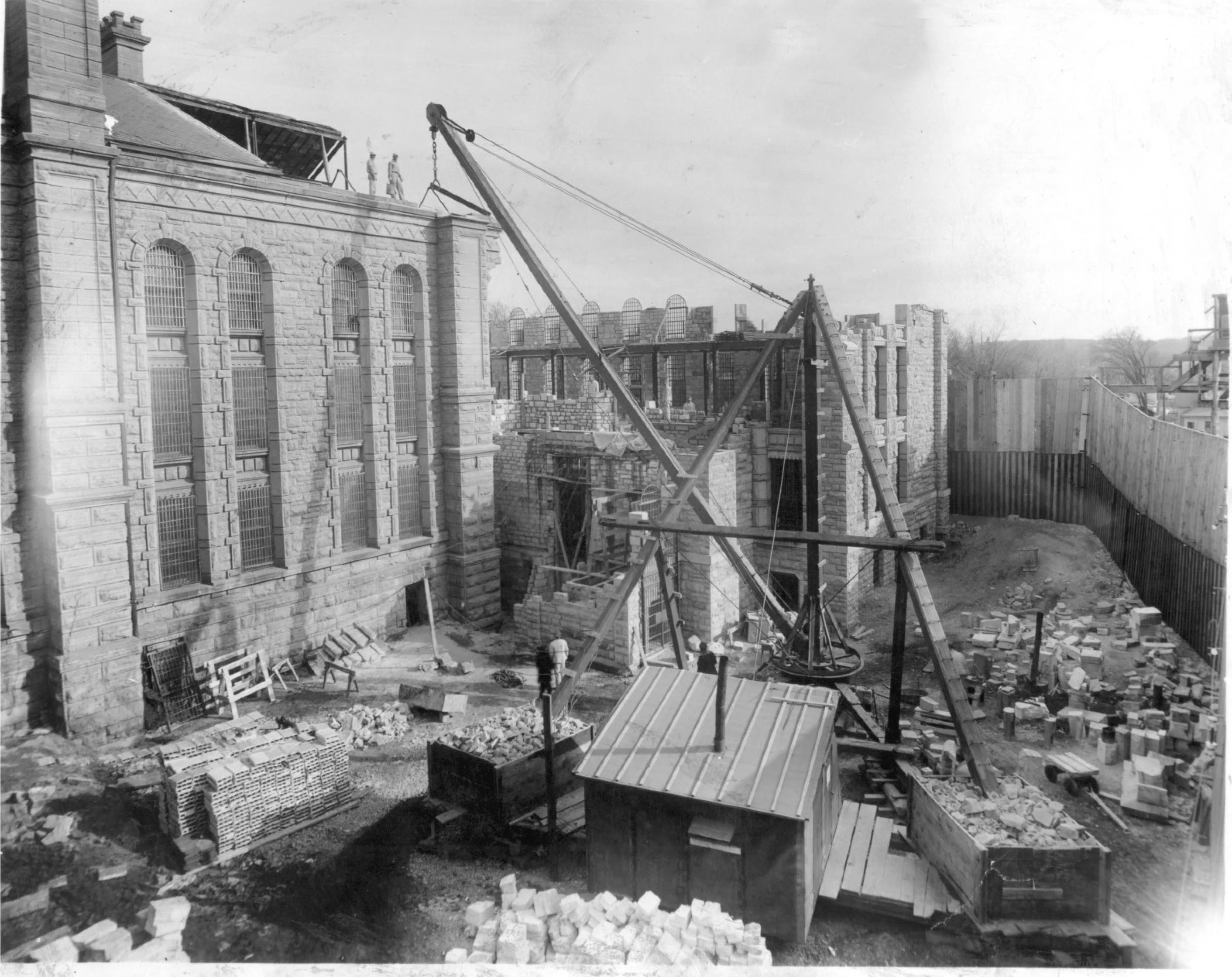
Building Construction
Building the gigantic prison would require the manpower of two generations of inmates.
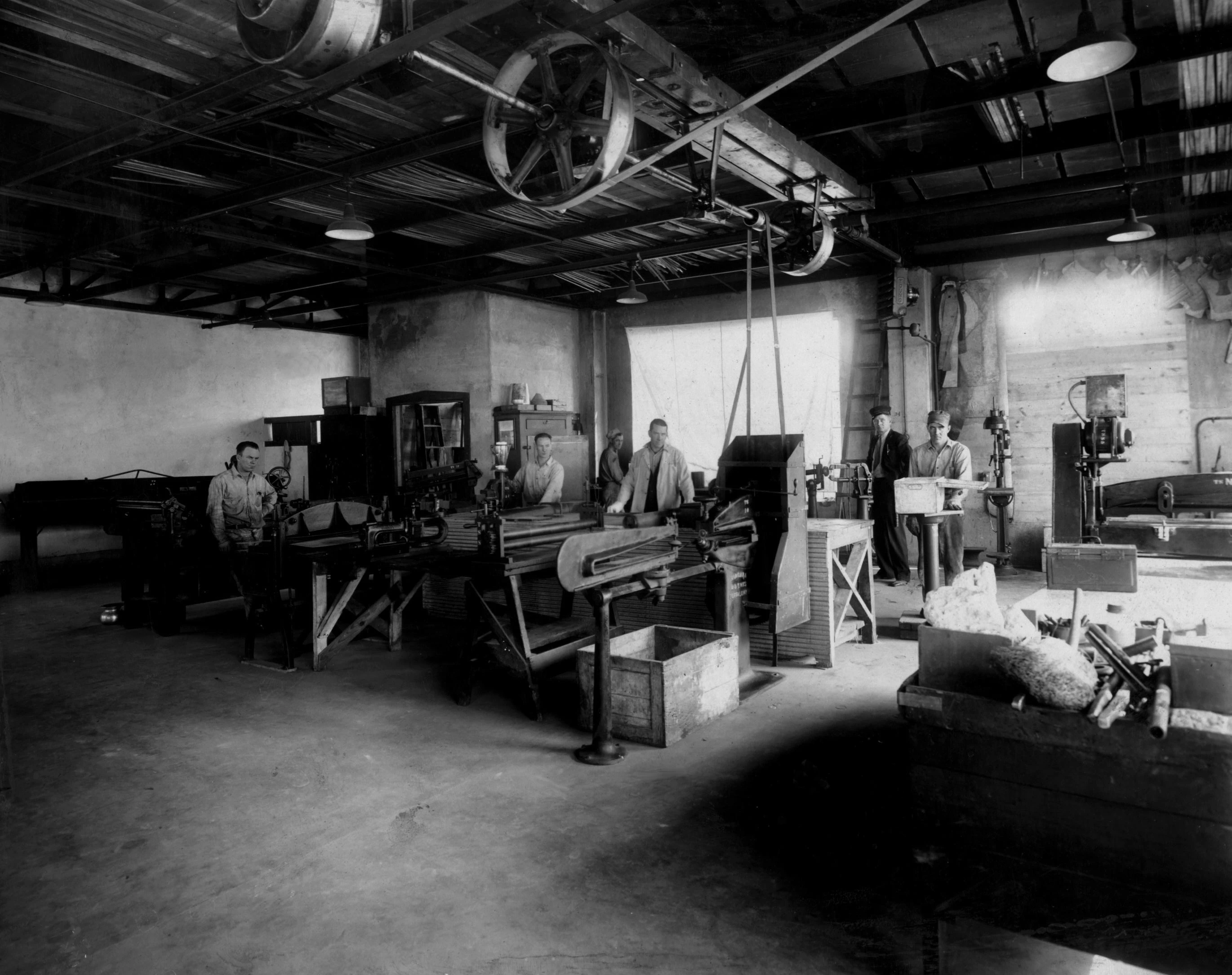
Metal Fabrication
One of the many specialized workshops that supported the institution.
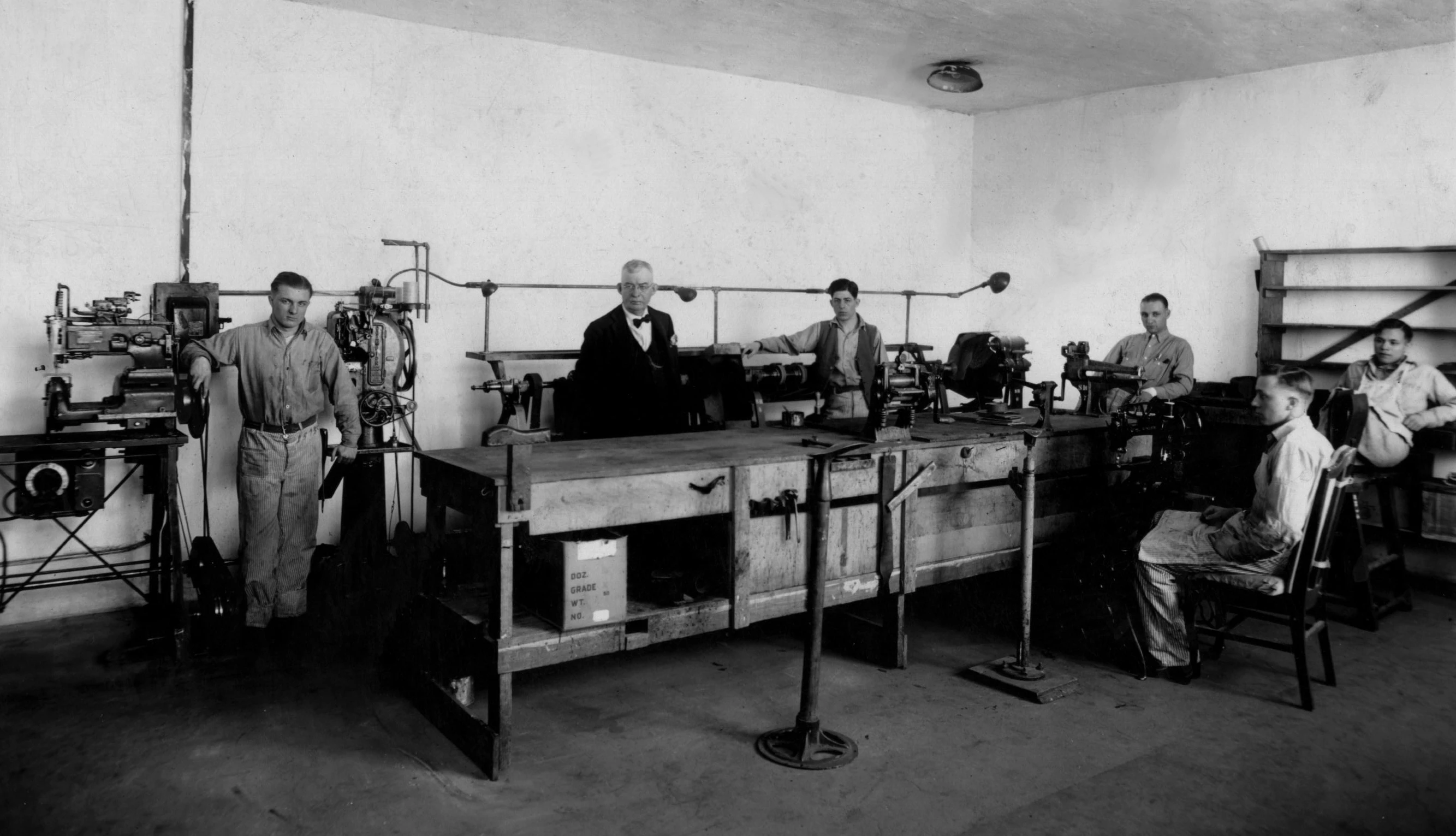
Shoe Repair
Think of all the state-issued shoes worn by hundreds of inmates, working at hard labor - shoe repair would be a necessity.
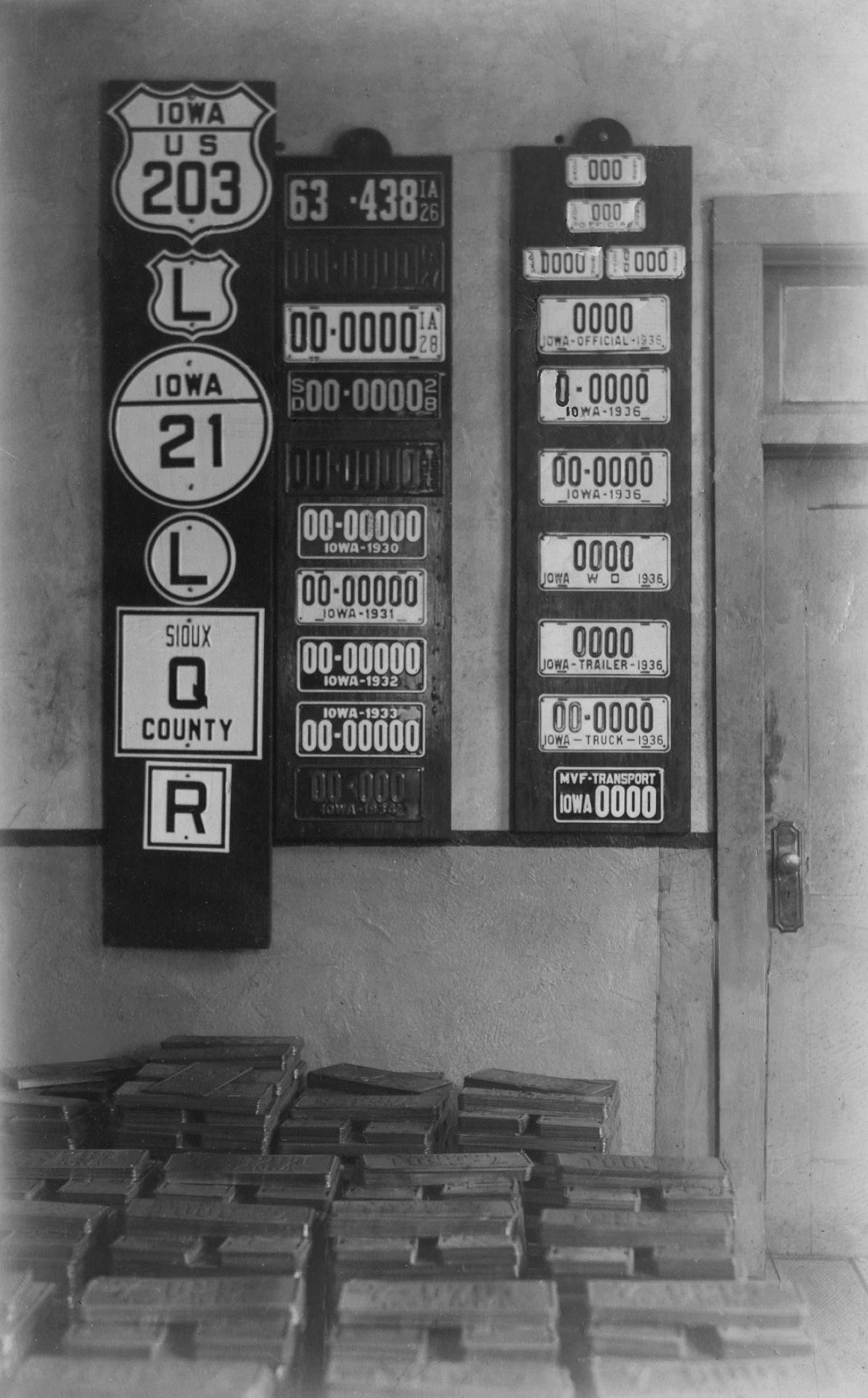
Highway Signs and License Plates
Virtually all license plates in Iowa originated at Anamosa - even the stickers you renew with each year. Highway signs are also fabricated here.
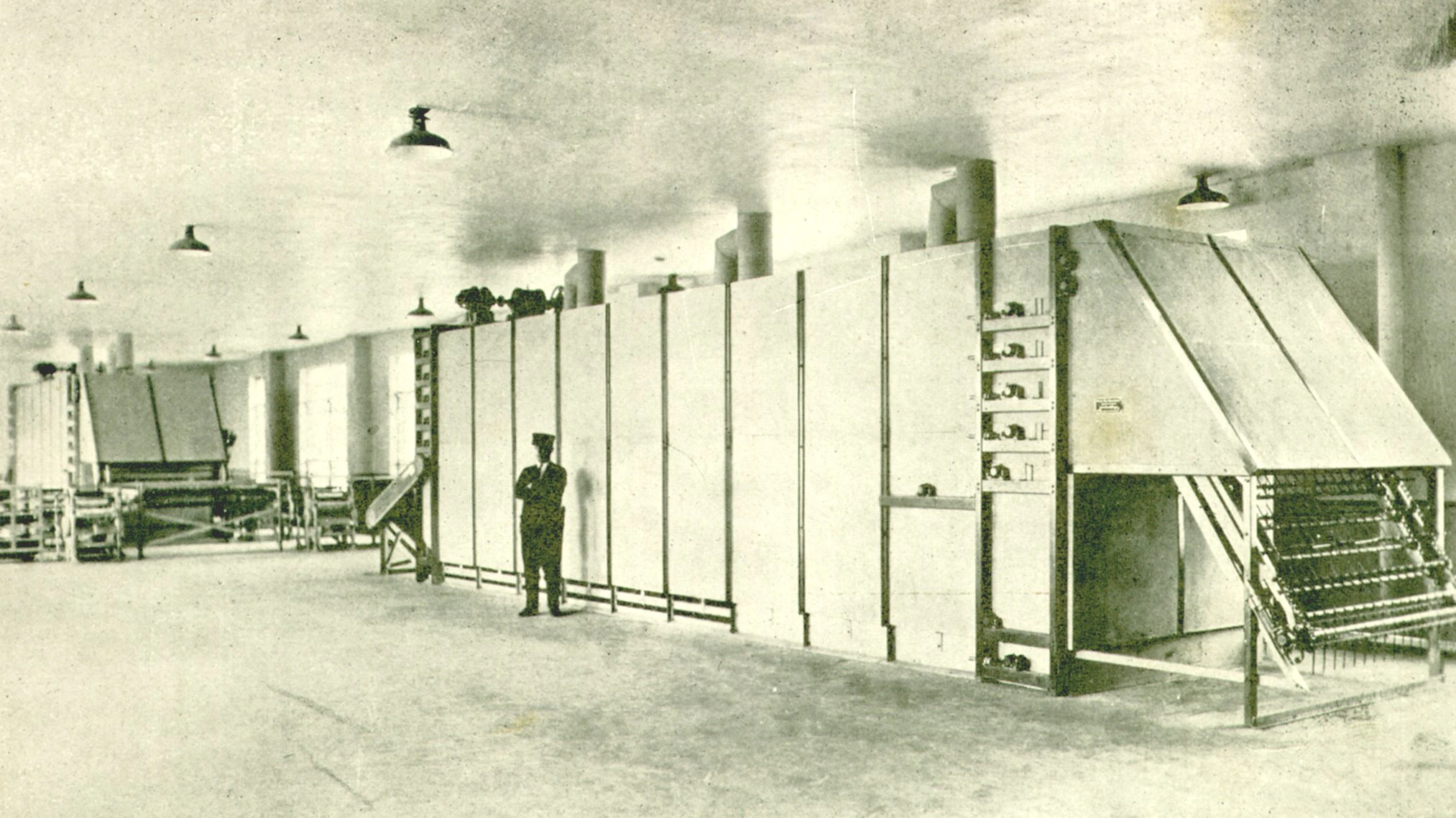
License Plate Operation
A supervisor stands near one of the massive machines in the License Plate Shop.
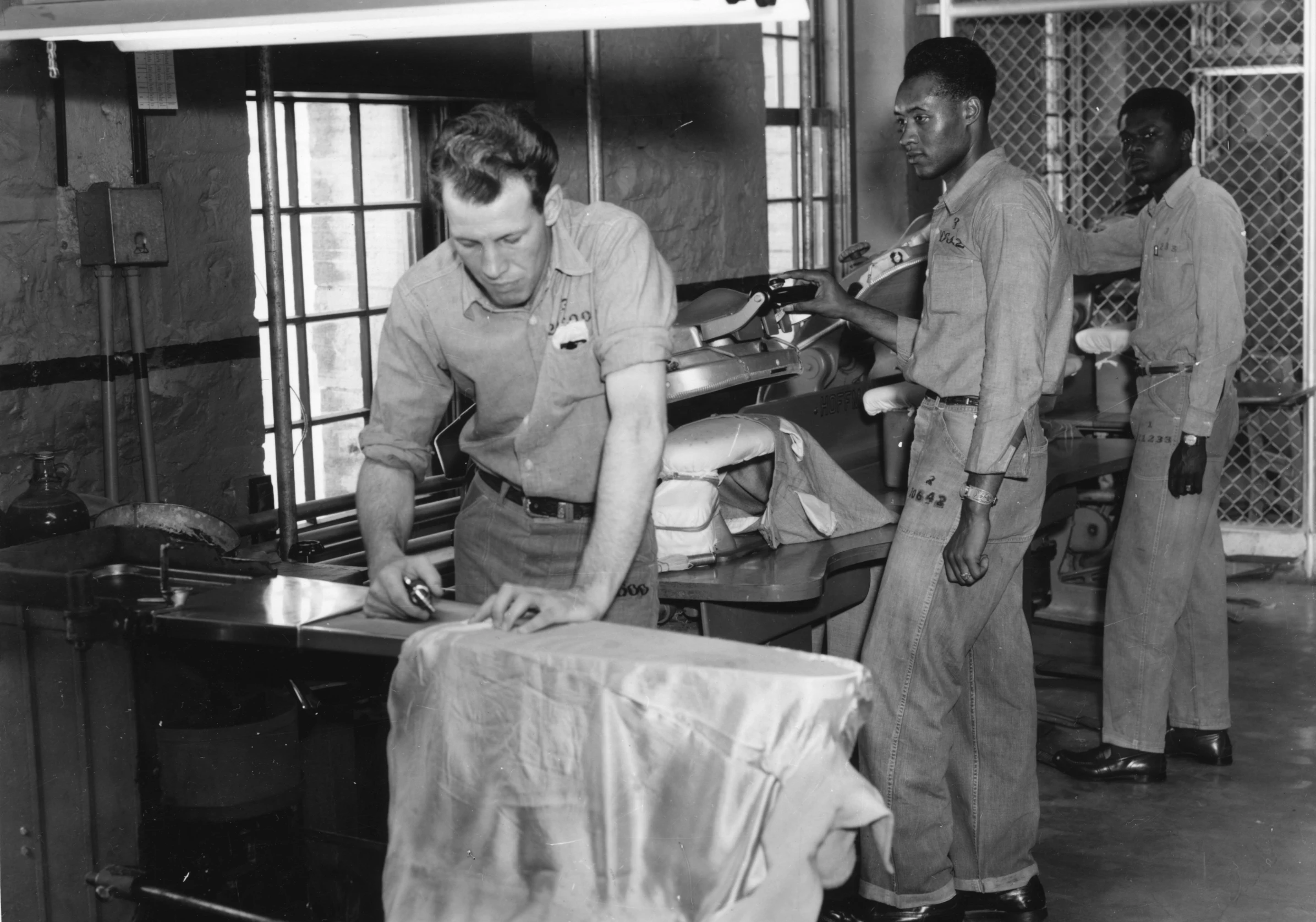
Clothing - exact shop unknown
Could be clothing issue, tailor shop, possibly drycleaning?
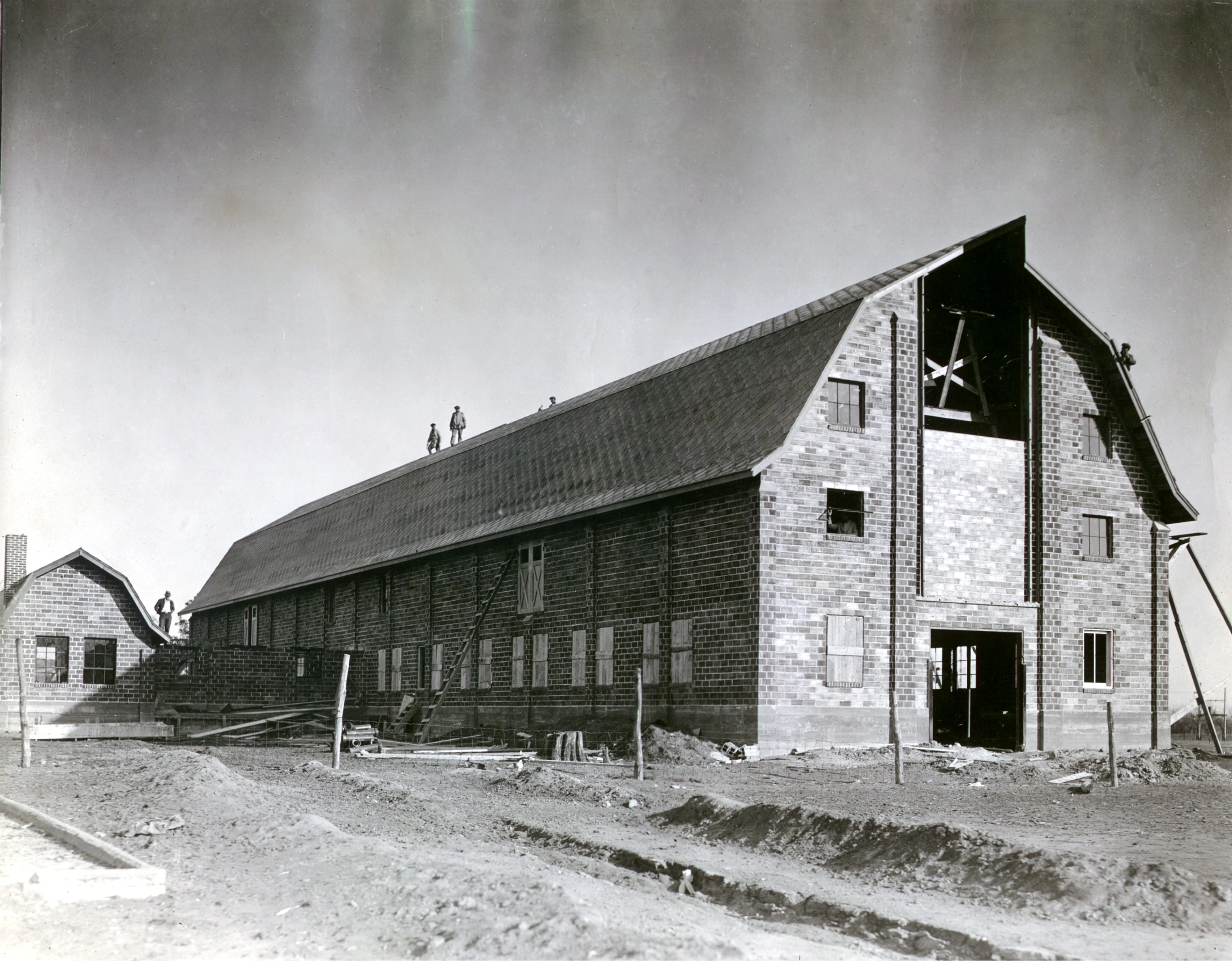
Dairy Barn
This barn, which still stands, was built in 1929 and was said to be the largest barn in Iowa at the time. A dedication dance was scheduled but turned into a terrible mess when torrential rains turned the barn road to muck.
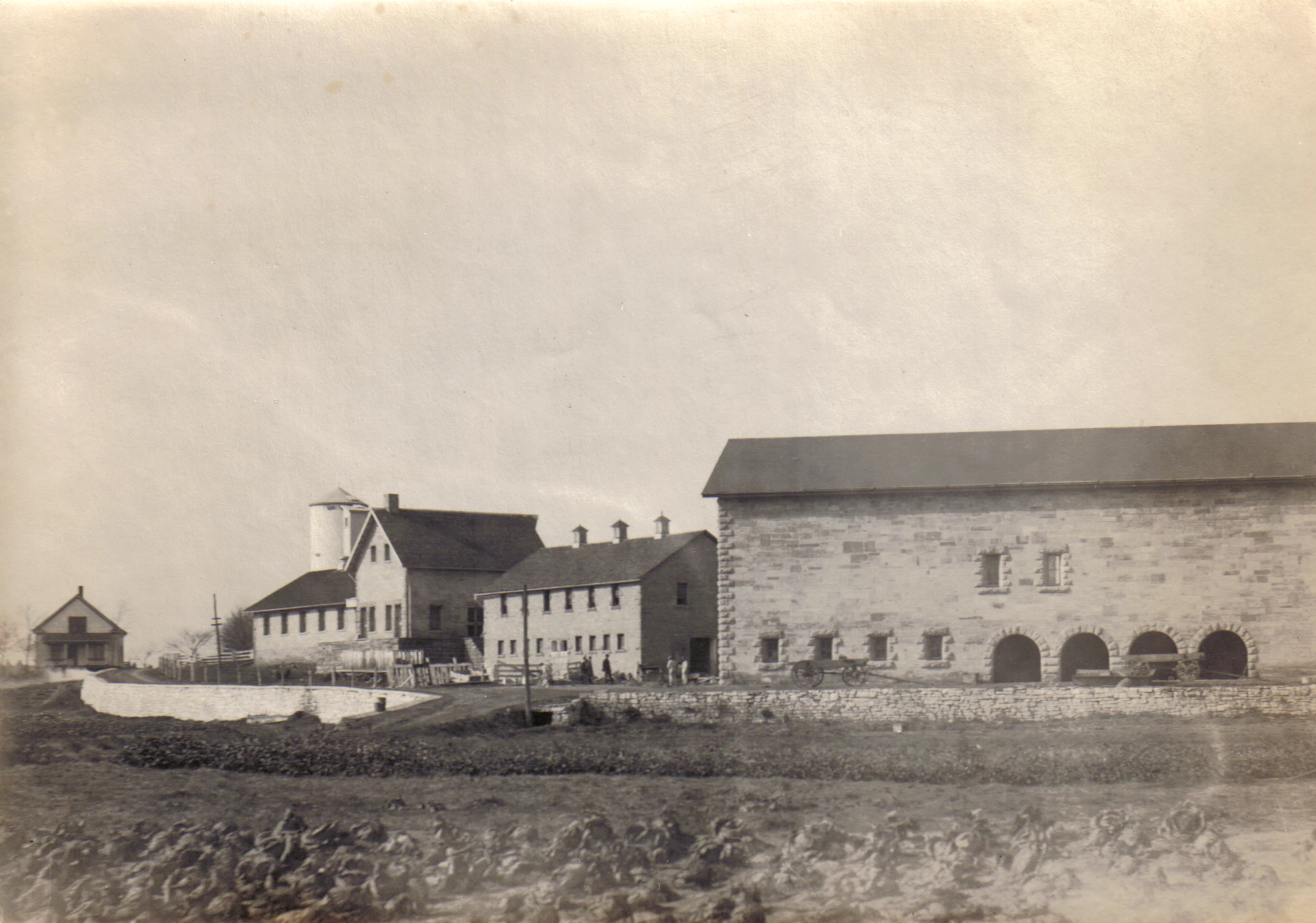
The Prison Farms
Around 1913 prisons around the country decided to expand their farm operations, believing it was healthy work for the inmates and a way to more cheaply supply institutional needs for meat and vegetables. The farm pictured here was a completely self-contained birth-slaughter-processing facility. The state owned several farms in the Anamosa area. However, the farm program has been greatly reduced since then and is a mere shadow of its former self.
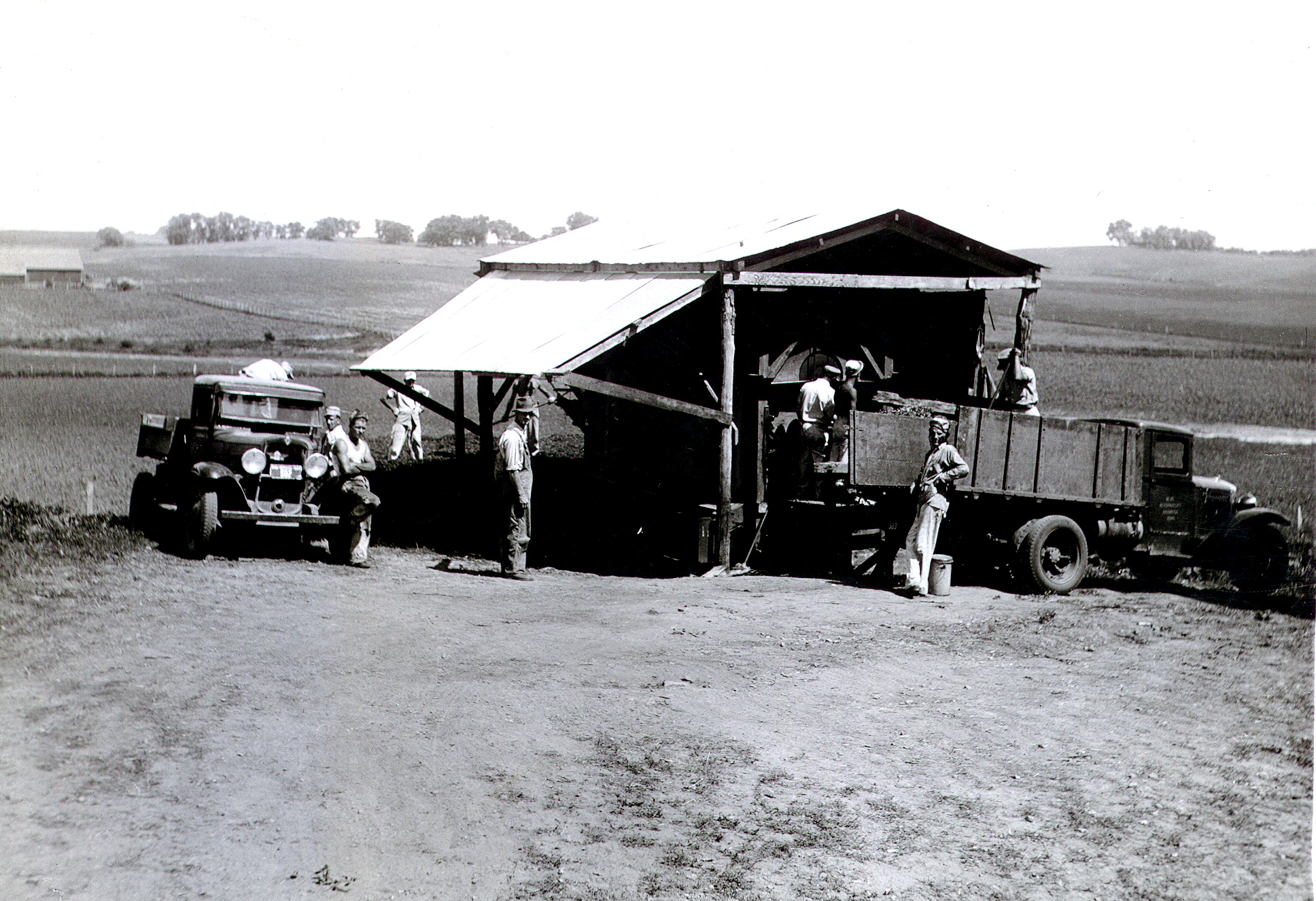
Field Work
Administrators believed the fresh air and hard work would have a salutary effect on the inmate workers.
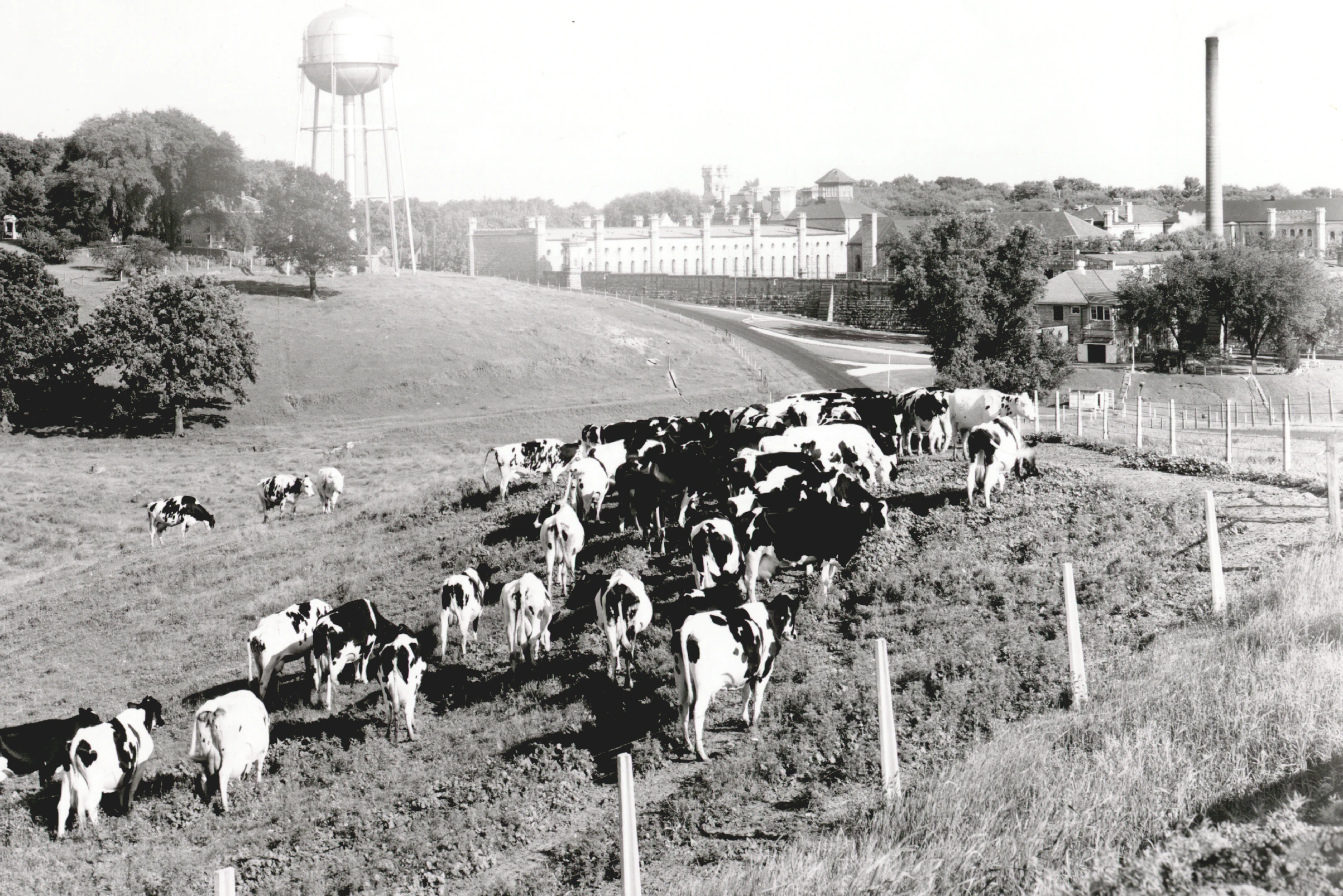
Dairy Herd
The institution had prize winning dairy herds through the years.
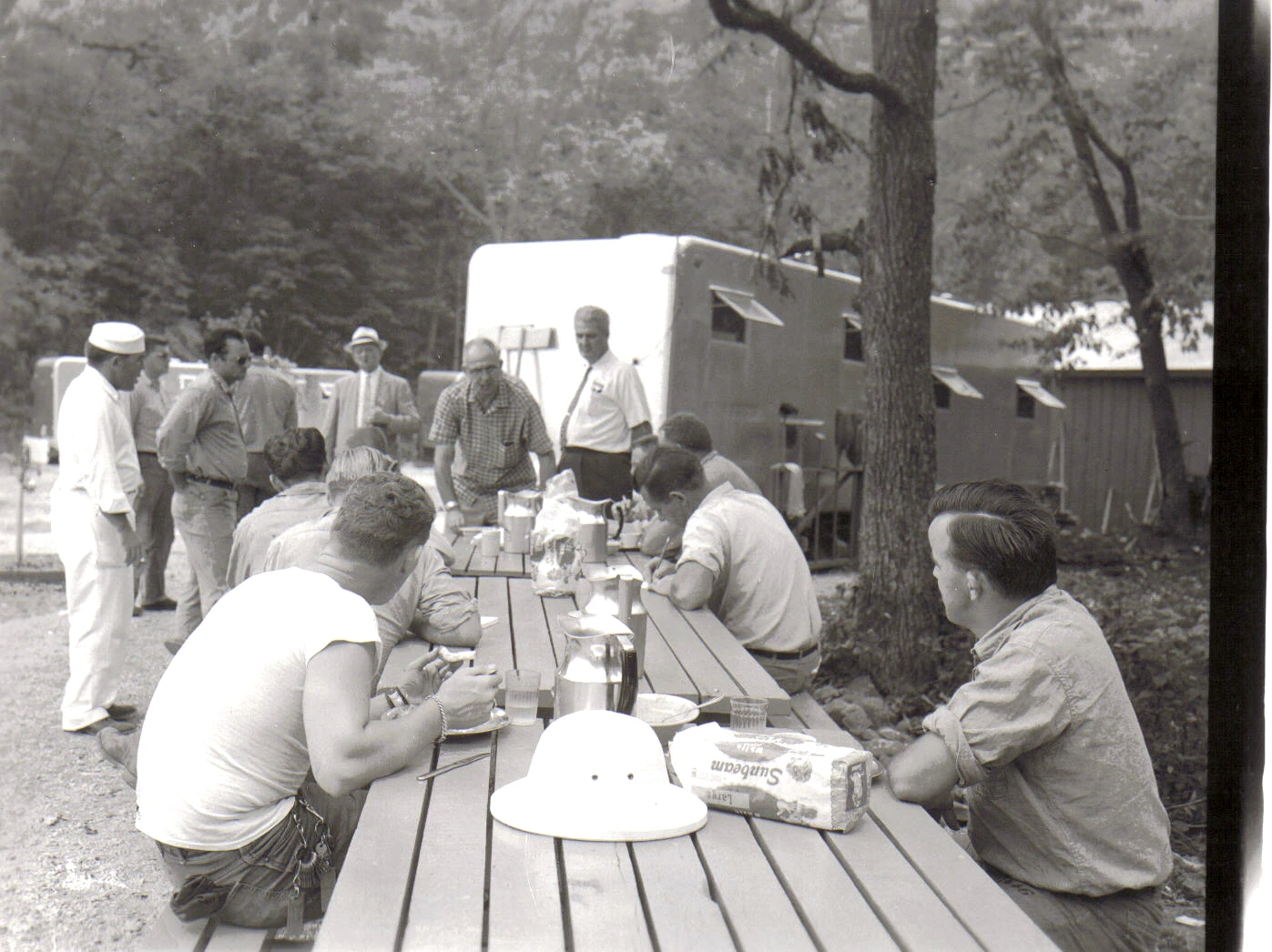
Luster Heights - the Beginning
Temporary shelter was provided until permanent buildings could be constructed in 1963.
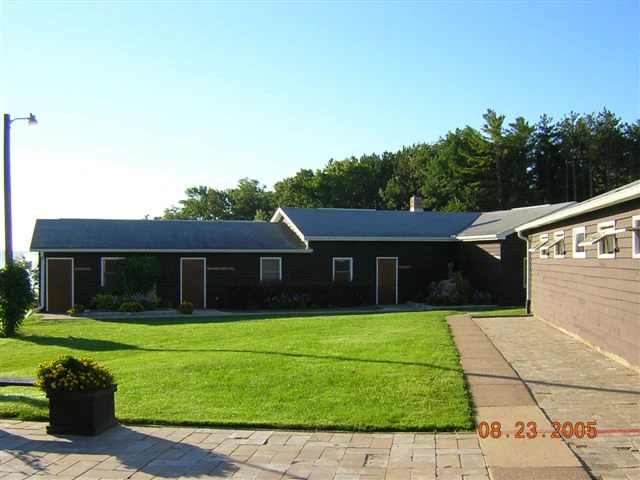
Luster Heights #1
Situated on a bluff high above the Mississippi River, Luster Heights provided killer scenic views for inmates, staff, and visitors.
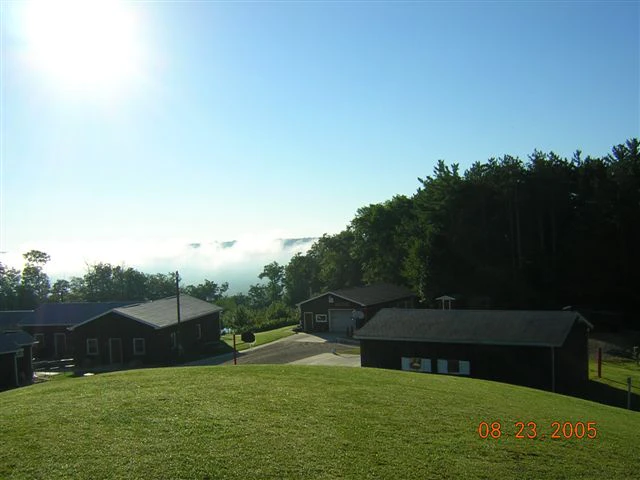
Luster Heights #2
An overview of the campus, as it was. All buildings since demolished.
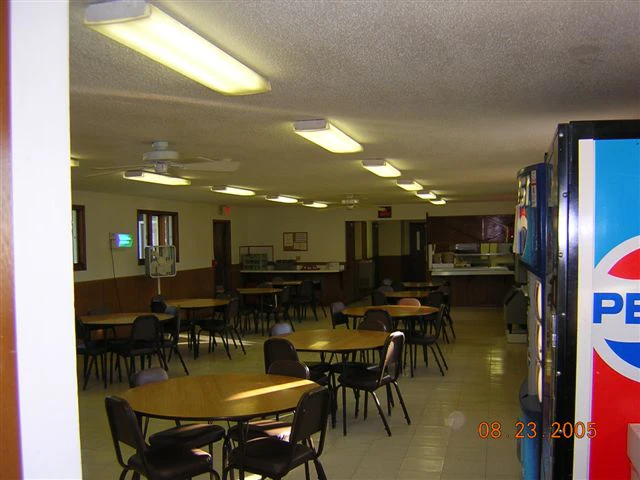
Luster Heights #3
Dining room, Luster Heights
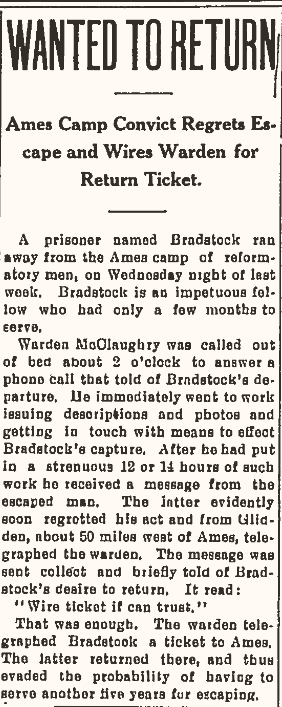
Pangs Of Regret
A local newspaper cutting describing the escape of inmate Bradstock from the work crew. He walked off, but later had second thoughts...
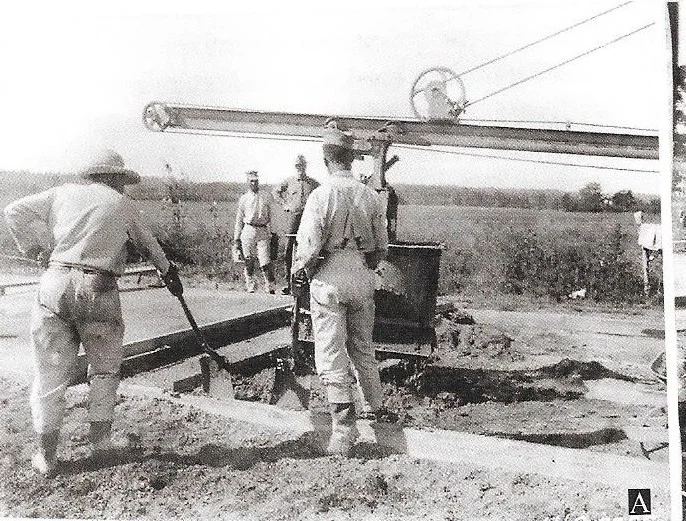
"Convict Road" - Louisa County 1914
Anamosa prisoners working the "Convict Road" in Louisa County.
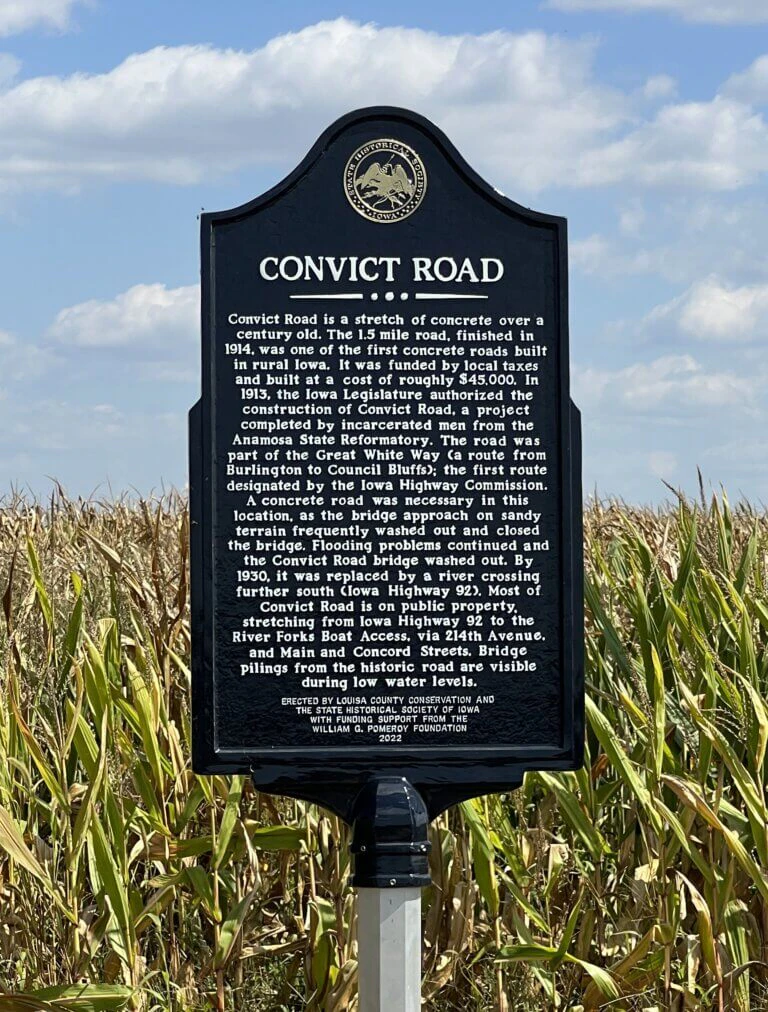
Convict Road Plaque
The Convict Road historic site was dedicated in 2019.